

Staying in Valletta gives you something day visitors miss: the capital after the cruise crowds and excursion groups have left. At night, limestone streets become calmer, restaurant terraces feel more local and Grand Harbour viewpoints take on a completely different atmosphere. The price is that Valletta is not a beach resort, parking is awkward and its steep streets can be inconvenient with luggage or limited mobility.
This guide explains who should stay in Valletta, which parts of the small city feel different, what to check before booking a boutique hotel and when Sliema or another base makes more sense.
Compare Valletta stays
Compare current options before you book. Availability and prices can change by date.
Affiliate links: My Malta Trip may earn a commission at no extra cost to you.
At a glance
| Best for | Valletta verdict |
| First-time sightseeing | Excellent |
| Public transport | Excellent |
| Historic atmosphere | Excellent |
| Sandy beach access | Weak |
| Nightclubs | Limited |
| Car-based trip | Inconvenient |
Why stay in Valletta at all?
Valletta is Malta’s strongest base for travellers who put history, walking and public transport ahead of beaches. The main bus terminus sits just outside the city gate, ferries connect across the harbours, and many of Malta’s major museums and historic sights are within walking distance of your room.
The bigger advantage is emotional rather than logistical. A morning coffee before tour groups arrive and an evening walk after the streets quieten can make the capital feel like part of your holiday rather than a sightseeing stop. If you love city breaks, Valletta deserves serious consideration.
The city is small, but street choice still matters
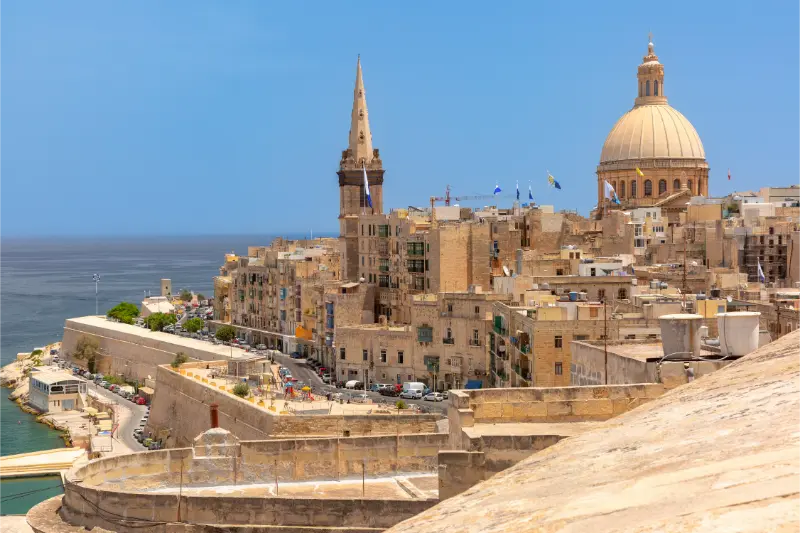
Valletta’s grid looks simple, yet elevation changes make two addresses with similar map distances feel different. Republic Street and Merchants Street form the main pedestrian spine, while side streets fall toward Grand Harbour or Marsamxett Harbour. Lower streets can mean more climbing when you return to the centre.
Before booking, open the map and trace the route from city gate or your likely taxi drop-off. If you have heavy luggage, a 500-metre walk with steps is not the same as a flat 500 metres.
Near City Gate: best for transport and short stays
The upper end of Valletta near City Gate works well for travellers with only two or three nights. You are close to the bus terminus, the Triton Fountain area and the beginning of the main pedestrian streets. Day trips to Mdina, Marsaxlokk or northern Malta become easier because you spend less time dragging yourself across the city before a bus.
The trade-off is that this zone feels more like an arrival point during the day. If your priority is romantic evening atmosphere, you may prefer to be deeper into the peninsula.
Central Valletta: best for first-time atmosphere
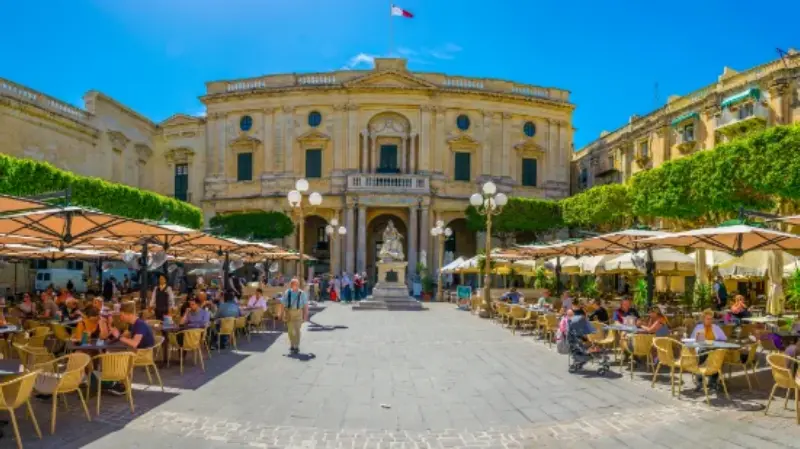
The middle of the city around Republic Street, Merchants Street and the surrounding lanes offers the classic Valletta experience. St John’s Co-Cathedral, cafés, restaurants and many cultural sights are close, and you can return to your room during the hottest part of the day.
Noise varies enormously by exact street and building. A pedestrian lane that is charming at 18:00 can host restaurant tables or late conversation after 23:00. Read recent reviews for noise rather than assuming that “historic centre” means quiet.
Grand Harbour side: views and steep streets
The southeastern side facing Grand Harbour can deliver beautiful views and quick access to Upper or Lower Barrakka areas depending on the property. It also contains steep streets and stairs. A balcony view may be worth the climb for one traveller and become a daily nuisance for another.
This side works especially well if you plan to explore the Three Cities because harbour connections are part of your sightseeing. Confirm the exact walking route to the ferry or lift rather than relying on the hotel’s marketing phrase “near the harbour.”
Marsamxett side: useful for Sliema ferry access
The western side of Valletta can be convenient for travellers who expect to use the ferry toward Sliema. The crossing is one of the most pleasant ways to move between the two urban centres, but ferry schedules are not an all-night transport system. Check the current timetable if you plan dinners across the water.
Staying here gives you an easy contrast: historic Valletta at home, modern Sliema for shopping and a different waterfront when you want it.
Boutique hotel or larger hotel?
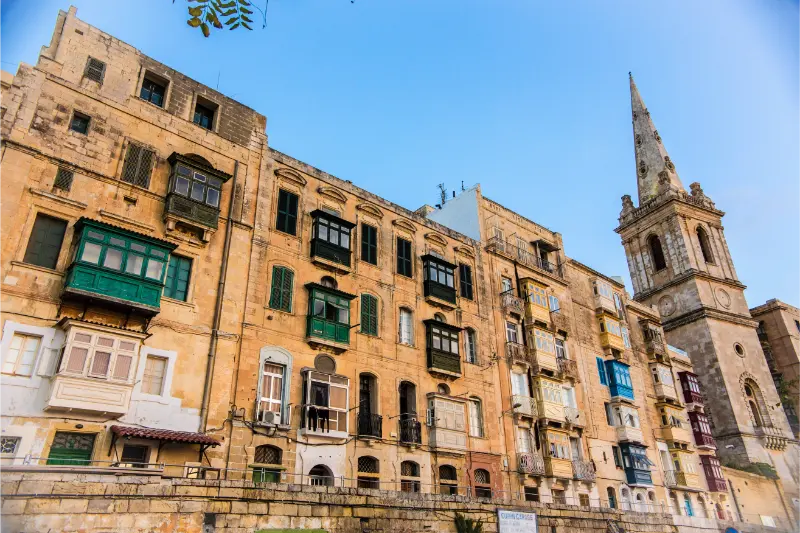
Valletta’s accommodation personality leans strongly toward smaller boutique properties, converted townhouses and historic buildings. This is part of the appeal, but old architecture creates practical variations: lifts may be tiny or absent, rooms may have internal windows, staircases may be narrow and sound insulation may not match a modern business hotel.
If those details matter, ask before booking. Do not assume a high review score answers a question nobody else cared about. Larger hotels can offer more predictable facilities but may sacrifice some of the intimate Valletta feeling.
What to check before you book
- Lift access from street to room.
- Actual window or balcony type.
- Street noise in recent reviews.
- Air-conditioning policy and seasonal operation.
- Breakfast hours if you have early tours.
- Taxi drop-off point and luggage route.
- Distance to City Gate or ferry routes.
These details matter more in a historic city than the difference between two nearly identical room photos.
Valletta without a car
Valletta is one of Malta’s best bases without a car. The bus hub, ferries and walkable centre mean you can build a full week around public transport. Our car-free Malta guide shows how to connect the capital with Mdina, Gozo and beaches.
If you do rent a car, Valletta becomes less attractive as a base because parking and restricted central access add friction. A car makes more sense for a rural or multi-base itinerary than for sleeping inside the capital every night.
What about beaches?
Valletta is surrounded by water but is not a classic beach town. If your dream holiday involves walking from the hotel onto sand every morning, stay in Mellieħa or another beach-oriented area and visit Valletta for the day. If you want one or two swimming days within a cultural trip, buses and taxis make that easy enough.
This distinction prevents disappointment. Harbour views are not the same product as a beach resort.
Valletta for couples
Couples who enjoy city breaks often love Valletta. Evening walks, wine bars, small restaurants and historic architecture create an intimate atmosphere without requiring a nightlife district. A balcony or roof terrace can be worth paying more for if you will actually use it.
For a romantic split stay, combine three nights in Valletta with two or three nights on Gozo. The contrast between capital and island countryside gives the trip more texture.
Valletta for families
Families benefit from central transport and short walking distances between major sights, but steep streets and historic buildings can be challenging with pushchairs. Choose accommodation with lift access and do not assume every townhouse conversion is toddler-friendly.
Older children who enjoy history can get much more from staying in Valletta because museums and harbour walks become easy to fit around meals rather than whole-day expeditions.
How much should you budget?
Valletta is rarely the cheapest place to sleep in Malta, especially for attractive boutique rooms. Prices vary strongly by season and event calendar. Compare current rates on Booking.com and then check the map carefully before choosing the lowest price.
A slightly more expensive central room can save taxi fares and transport time. Conversely, if you plan to spend every day at beaches or in St Julian’s nightlife, paying a Valletta premium makes little sense.
A realistic Valletta stay
On a four-night Valletta stay, spend the arrival evening simply walking the centre. Use the first full day for the co-cathedral, harbour viewpoints and one museum. Make the second day a Three Cities excursion and the third a Mdina day trip. This leaves the final morning for anything you missed without turning the capital into a place you only sleep.
That rhythm is one reason a central Valletta room can justify a higher rate: you repeatedly return on foot, take breaks during the heat and experience the city at different times rather than commuting into it once.
Frequently asked questions
Is Valletta the best place to stay for a first trip to Malta?
It is one of the best choices for travellers focused on history, sightseeing and public transport. It is less suitable if beaches, nightlife or driving are the priorities.
How many nights should I stay in Valletta?
Three to five nights works well for many first-time visitors. You can use the city as a base for Mdina and harbour day trips, then move to Gozo or a beach area if you want a contrasting second base.
Is Valletta noisy at night?
Some streets are quiet and others have restaurants, bars or late pedestrian activity. Noise is highly property-specific, so read recent reviews and check whether your room faces a busy street.
Do I need a car if I stay in Valletta?
No. In fact Valletta is one of the easiest bases for a car-free trip because the main bus terminus is just outside the city and ferries connect across both harbours.
Final thoughts
Choose Valletta if you want Malta to feel like a historic city break with islands attached. Stay near City Gate for transport, deeper in the centre for atmosphere, and pay close attention to stairs, lifts and street noise. If you want sand or clubs outside your door, choose another base and visit the capital instead.