

Gozo is close enough for a day trip, but different enough to deserve more time. The island is greener, quieter and more rural than Malta, with limestone villages, dramatic coastal scenery, a compact fortified capital and a slower rhythm that becomes more obvious after the day-trip traffic leaves.
If you have five days in the Maltese Islands, give Gozo at least one full day. With a week, stay overnight. This guide focuses on how to choose the stops rather than trying to cram every viewpoint into a single circuit.
Make the most of Gozo
Compare current options before you book. Availability and prices can change by date.
Affiliate links: My Malta Trip may earn a commission at no extra cost to you.
How to get to Gozo
The classic vehicle and passenger ferry runs between Ċirkewwa in north Malta and Mġarr Harbour in Gozo. Gozo Channel currently lists the crossing at approximately 25 minutes and operates daily. The standard passenger fare is currently €4.65, while children aged 3–12 pay €1.15 and infants 0–2 travel free under the operator’s conditions. Always verify the current ferry timetable and current fares before travel.
A high-speed passenger service also connects Valletta and Gozo, which can be convenient if you are based around the capital or Sliema and do not need a car. Choose the route based on where you are staying, not simply which ferry sounds faster.
Should you take a car to Gozo?
A car gives you flexibility for beaches, cliffs and small villages, but it is not essential. Buses connect major locations and Victoria acts as the island’s transport hub. For a one-day trip by public transport, limit yourself to three or four major stops. With a car, avoid the temptation to double that number.
Victoria and the Citadel
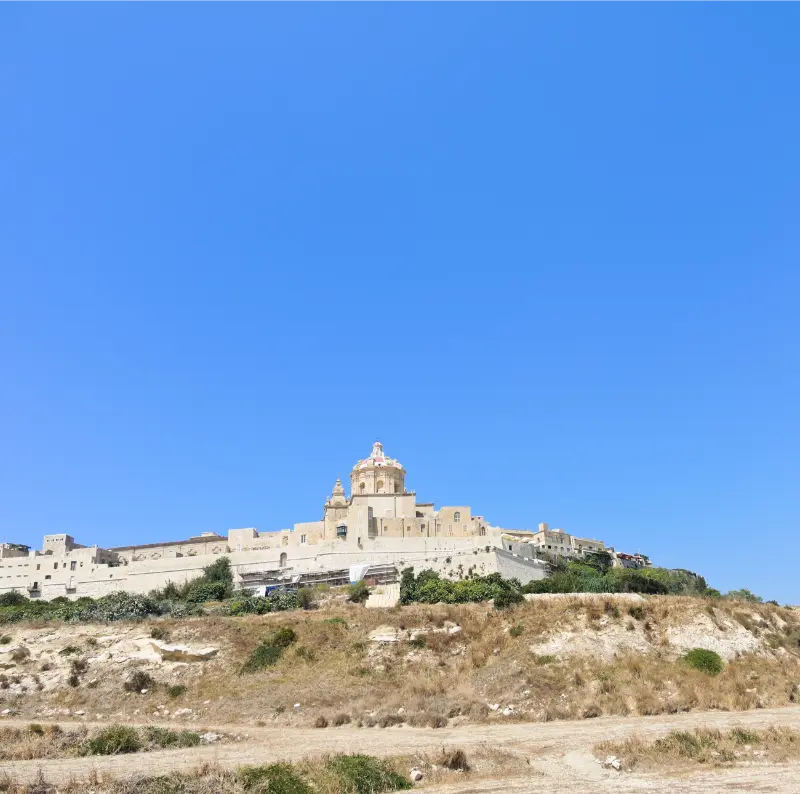
Start with Victoria, also called Rabat, and climb to the Citadel. The fortified complex gives you a broad view across Gozo and helps orient the rest of the day. Walk the walls and lanes, then descend into the town for coffee or lunch. The Citadel is not just a viewpoint; museums and historic buildings can easily add several hours for travellers interested in history.
Ramla Bay
Ramla Bay is Gozo’s best-known sandy beach, famous for its reddish-gold sand and wide valley setting. It works well as a swimming stop in calm conditions, but it is also worth seeing outside peak beach season. Arrive earlier in summer if you want easier parking and more space.
Dwejra: more than the memory of the Azure Window
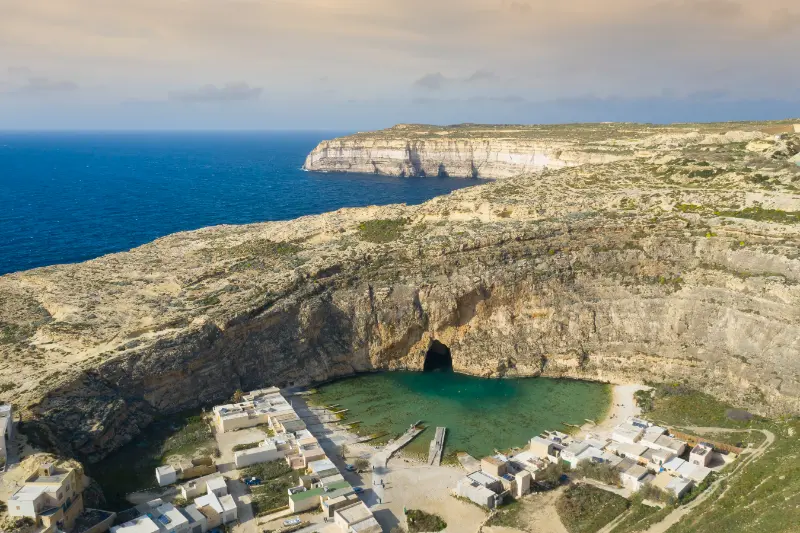
The Azure Window collapsed in 2017, but Dwejra remains one of Gozo’s most dramatic coastal areas. The Inland Sea, cliffs and Blue Hole create a landscape that feels different from the sandy beaches elsewhere. Sea conditions matter, especially for swimming and boat trips, so do not treat the coast as risk-free simply because it is popular.
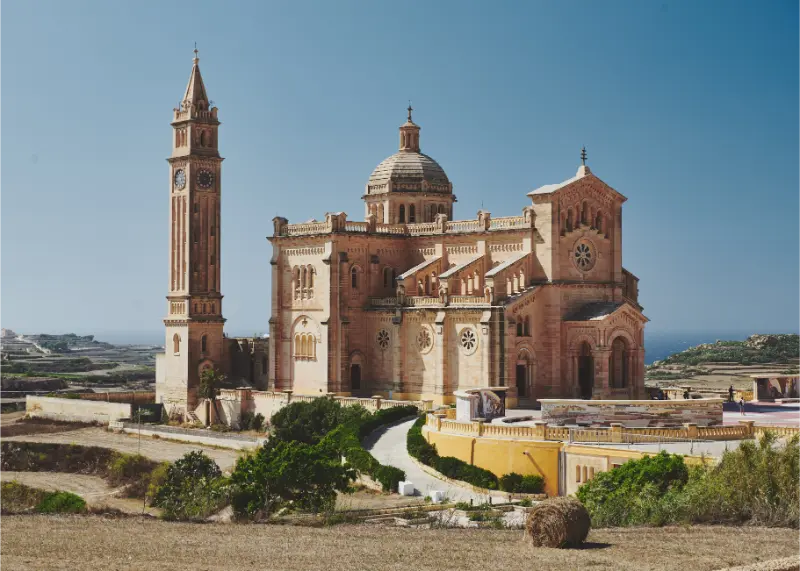
Ta’ Pinu Basilica
Ta’ Pinu rises from open countryside and feels especially striking because of the space around it. Even if you are not travelling for religious reasons, the basilica and surrounding landscape make a worthwhile stop between western Gozo locations.
Xlendi
Xlendi combines a small bay, restaurants and cliff walks. It is a convenient lunch or sunset stop and works well for travellers who want a compact coastal village rather than a large beach. Parking can tighten in peak periods, so arrive before dinner time if you are driving.
Marsalforn and the salt pans
Marsalforn is one of Gozo’s livelier coastal bases. Continue west along the coast toward the Qbajjar and Xwejni salt pans for a more distinctive landscape. These are working cultural landscapes, not playgrounds, so respect barriers and avoid walking across active salt pans.
Għarb and Għasri for a quieter Gozo
If your ideal Gozo is quiet stone villages rather than beach resorts, spend time around Għarb, Għasri and the north-west. The distances are small, but the atmosphere changes quickly once you leave the larger roads.
Where to stay in Gozo
Victoria is practical without a car because buses radiate from the centre. Xlendi and Marsalforn suit travellers who want sea views and restaurants nearby. Rural farmhouses around villages such as Għarb appeal to couples, families and groups who prefer privacy. For a luxury resort experience, the Kempinski Hotel San Lawrenz is one of Gozo’s established high-end options. Compare accommodation through Booking.com and also see our Malta and Gozo accommodation guide.
One-day Gozo itinerary
- Take an early ferry to Mġarr.
- Head to Victoria and the Citadel.
- Choose either Ramla Bay or the north coast for late morning.
- Have lunch in Victoria, Xlendi or Marsalforn.
- Spend the afternoon around Dwejra and Ta’ Pinu.
- Return to Mġarr without planning the last possible ferry connection.
Two-day Gozo itinerary
On day one, focus on Victoria, Dwejra, Ta’ Pinu and the west. On day two, explore Ramla Bay, the north-coast salt pans, a village or coastal walk and a relaxed lunch. Two days let you respond to weather and sea conditions instead of forcing a beach visit at the wrong time.
Best time to visit Gozo
Spring is excellent for greener landscapes and walking. Summer is best for swimming but also hottest and busiest. September and October are strong all-round months because the sea remains warm and sightseeing becomes more comfortable. Winter suits quiet weekends and culture, though exposed coastal areas can be windy.
Frequently asked questions
Can you visit Gozo as a day trip?
Yes. One day is enough for a good introduction, but choose a focused route. If Gozo is one of your priorities, stay overnight.
Do you need to book the ferry?
Rules and ticketing depend on the service and whether you travel with a vehicle. Check the official operator before departure rather than relying on old forum advice.
Is Gozo good with children?
Yes. Short distances, beaches, the Citadel and rural accommodation can work very well for families. A car can make logistics easier if you travel with young children and beach equipment.
How to choose a Gozo route by weather
Gozo is exposed to wind, and the best route changes with conditions. On a calm, clear day, prioritise Dwejra, Ramla and coastal viewpoints. On a windy day, spend more time in Victoria, the Citadel, churches and sheltered villages. This flexibility is one of the strongest reasons to avoid pre-planning every hour of a Gozo day months in advance.
Swimming plans should be especially flexible. A bay that looks perfect in photos can be rough or affected by currents on a particular day. Ask locally, observe flags and other swimmers, and be willing to switch coasts. Gozo is small enough that changing your plan is usually possible.
Food and local products in Gozo
Gozo has a strong food identity within the Maltese Islands. Look for local gbejna cheese, ftira-style breads, tomatoes, olive products, honey and seasonal produce. Village bakeries and farm shops can be more memorable than chasing a single famous restaurant. In coastal towns such as Xlendi and Marsalforn, seafood is widely available, while Victoria offers the broadest choice of cafés and restaurants.
Lunch is also a useful pacing tool. Rather than squeezing another sight into the middle of the day, stop for an hour and reset. Gozo’s appeal is partly the slower rhythm, so a long meal is not wasted sightseeing time.
Walking and outdoor activities
Outside the hottest summer months, Gozo is excellent for walking. Coastal stretches around Dwejra, Xlendi, Għasri and the salt pans offer open views and a sense of the island’s geology. Trails vary in condition and signage, so use a reliable map, wear proper footwear and avoid cliff edges in strong wind.
Divers and snorkelers also have many options, but conditions and certification requirements matter. Book with reputable operators and do not treat famous sites such as the Blue Hole as casual swimming areas simply because they appear in travel photographs.
Gozo with a rental car
Driving gives freedom, but village streets can be narrow and parking near beaches or popular viewpoints may fill quickly. Use a small car if possible, avoid blocking agricultural access, and do not assume an unmarked dirt shoulder is a legal parking place. In Victoria, it is often easier to park once and walk than to move the car between nearby sights.
Gozo without a car
Without a car, organise the day around Victoria. Travel from Mġarr to the capital, then take separate routes to one or two coastal areas. This hub-and-spoke approach is slower than driving but perfectly workable if you keep expectations realistic. Taxis can bridge one awkward leg and save time without requiring a full-day car rental.
How much time do you really need on Gozo?
One full day gives you a convincing introduction, but two days is where Gozo starts to feel like a destination rather than an excursion. Three nights suit travellers who want walking, beach time or slow village evenings. If your total Malta trip is only four or five days, a day trip is reasonable; with seven or more days, an overnight stay is one of the easiest ways to make the itinerary feel less rushed.
Final thoughts
Gozo gives Malta a second rhythm. It is not just a collection of sights across the water; it is where the trip can slow down. If you can, stay until evening, when the roads quieten and the island stops feeling like an excursion.
[…] Dwejra, Ġgantija and several hours at Ramla into one day is not a relaxed family plan. Our Gozo travel guide has a more realistic […]
[…] you have a week, visit Gozo separately and use another day for Comino. If you have three or four days, decide which island […]
[…] is a highlights day, not a comprehensive Gozo tour. Our Gozo guide contains more ideas, but for a three-day Malta trip you should deliberately ignore most of them. […]
[…] can work surprisingly well: several nights around St Julian’s or Sliema followed by two nights on Gozo. The contrast prevents nightlife from dominating the entire […]