

Mdina is one of Malta’s most atmospheric places, but the best visit includes Rabat too. The walled former capital gives you silent lanes, noble palaces and panoramic bastions; just outside the gate, Rabat adds catacombs, churches, bakeries and everyday local life. Together they create a far richer half-day or full-day trip than Mdina alone.
The key is timing. Arrive early or stay toward evening, when the narrow streets become quieter and the colour of the limestone softens. If you visit only between late morning and mid-afternoon, you will see the same architecture but a very different mood.
Explore Mdina & Rabat
Compare current options before you book. Availability and prices can change by date.
Affiliate links: My Malta Trip may earn a commission at no extra cost to you.
How much time should you allow?
Three hours is enough for a quick look, but five to six hours is better if you want to enter a major site, have lunch and explore Rabat. History enthusiasts can easily spend most of a day here, especially if they visit St Paul’s Catacombs and other archaeological sites.
Enter Mdina slowly
The main gate is one of Malta’s most recognisable entrances. Once inside, resist the urge to head straight to the cathedral. Take the smaller lanes, notice the doorways, religious niches and enclosed balconies, and let the city’s scale reveal itself. Mdina is tiny, but that is precisely why rushing feels unnecessary.
St Paul’s Cathedral and Cathedral Square
The cathedral and its square form the ceremonial centre of Mdina. Even travellers who do not visit every church in Malta should spend time here because the architecture explains the former capital’s status and wealth. The surrounding palazzi are as important to the atmosphere as the cathedral façade itself.
Find the bastion viewpoints
At the edge of Mdina, the land falls away and views extend across a large part of Malta. On clear days you can understand the island’s compact geography from here. It is also a useful place to pause rather than treating the city as a sequence of monuments.
Walk the quieter lanes behind the main routes
Some of Mdina’s most beautiful corners are residential and require no ticket. Keep your voice low, respect private doorways and look for changing light rather than famous photo spots. Early morning and the hour before sunset are especially rewarding.
Cross into Rabat
Rabat begins almost immediately outside Mdina, yet feels much more lived-in. This is where I would stop for a simple lunch or snack. You will find bakeries, cafés and local streets without the same concentration of sightseeing groups.
St Paul’s Catacombs
The catacombs are one of the strongest reasons not to skip Rabat. The underground burial complexes reveal another layer of Malta’s long history and are particularly welcome on a hot day because much of the experience is below ground. Allow enough time to understand the site rather than just walking through the tunnels.
Domvs Romana and other nearby history
The Domvs Romana is useful for travellers interested in Malta’s Roman period, while Rabat’s churches and smaller museums broaden the day beyond medieval Mdina. You do not need to visit everything. Choose one major Rabat site and then leave time for streets and food.
Where to eat
Rabat is often the better choice for lunch because it has a more everyday feel. Look for local pastries, ftira and traditional Maltese dishes. If you want a classic coffee-and-view stop inside Mdina, the terraces near the bastions are popular; for better value, walk a few minutes into Rabat.
How to get to Mdina and Rabat
Buses connect the area with Valletta and other tourist zones. The stop is outside the Mdina gate, so public transport is straightforward. If you are driving, use designated parking outside the walls: Mdina itself is not a place where visitors should expect to drive around looking for a space. Traffic and parking pressure rise on weekends, feast days and during events.
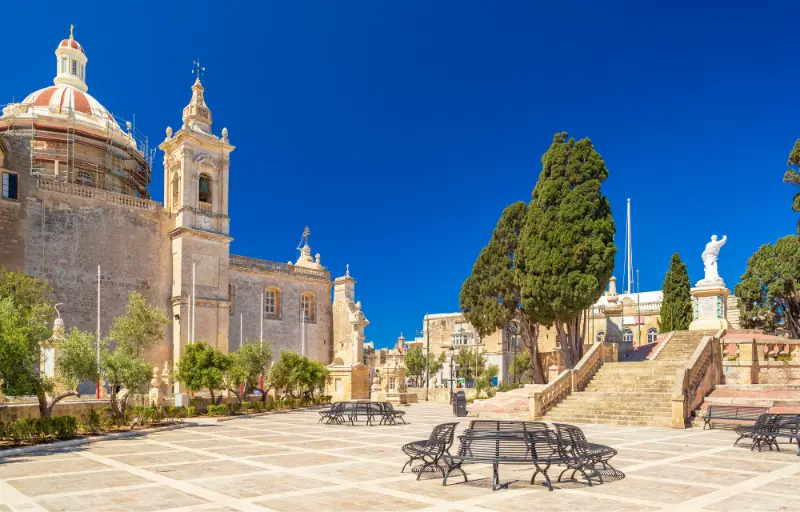
Can you combine Mdina with other places?
Yes, but combine it logically. Dingli Cliffs are a natural pairing if you have a car or a well-planned transport route. Mosta can also fit into the same day. I would avoid combining Mdina with distant north-coast beaches unless you are deliberately creating a very full day.
Mdina after dark
If your schedule allows, stay after sunset. The old city becomes quieter and the lamps change the mood of the stone streets. Dinner inside Mdina can be atmospheric, but even a 30-minute evening walk is enough to understand why the city is often called the Silent City.
A half-day route that works
- Arrive early and enter through Mdina Gate.
- Walk the side streets before the main square becomes busy.
- Visit the cathedral area and bastion viewpoints.
- Exit toward Rabat for lunch.
- Choose St Paul’s Catacombs or another Rabat site.
- Return to Mdina for late-afternoon light if time allows.
Frequently asked questions
Is Mdina free to enter?
Yes, entering and walking around the walled city is free. Individual museums, churches and attractions may charge admission.
Is Mdina suitable for children?
Yes for a short visit, especially if children enjoy castles and old streets, but add variety with Rabat, a snack stop or another family activity rather than spending an entire day only inside the walls.
Is Mdina accessible?
The main streets are relatively manageable, but historic paving, slopes and some older buildings can be challenging for wheelchairs or strollers. Check accessibility at individual attractions before visiting.
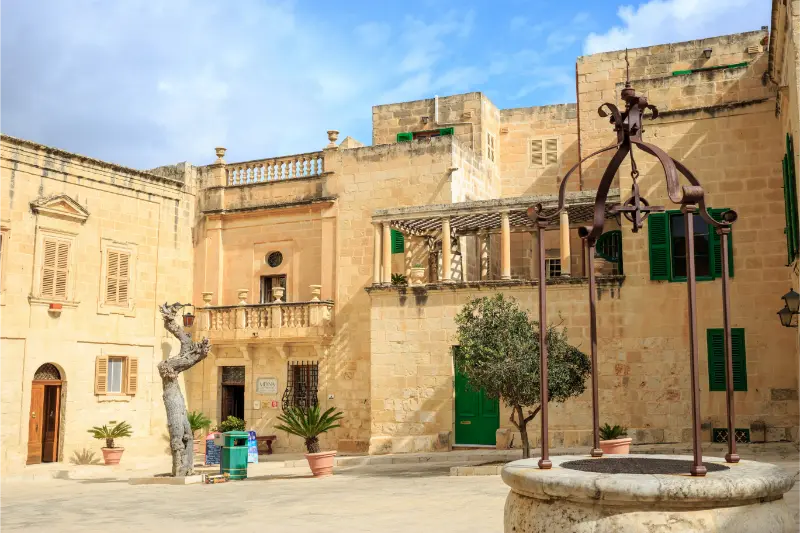
The history behind the atmosphere
Mdina’s importance comes from far more than its appearance. The site has been inhabited and fortified across successive periods, and for centuries it functioned as Malta’s principal city before the rise of Valletta. That long history explains the layered street plan, noble residences, churches and defensive position. Rabat developed immediately outside the walls and preserves archaeological evidence that reaches much further back than the medieval city visitors see today.
Knowing that context helps you read the places differently. Mdina’s controlled gates and bastions are not decorative; they reflect a city built around defence and status. Rabat’s underground sites reveal communities that lived and buried their dead here centuries earlier. The two places therefore form one historical landscape rather than two unrelated tourist stops.
What to photograph — and when
The classic images are the Mdina Gate, narrow lanes and cathedral square, but the best photographs often come from side streets where a single balcony, doorway or patch of light breaks the uniform limestone. Morning gives cleaner streets; late afternoon produces warmer tones and deeper shadows. After sunset, lamps create a cinematic look, though a tripod may be impractical in busier lanes.
In Rabat, photograph everyday details rather than trying to recreate Mdina’s postcard style. Bakery windows, painted signs, church façades and residential streets tell a different story. Always respect private homes and avoid blocking doorways for photographs.
What to do with children or teenagers
For younger children, make Mdina a short “fortified city” adventure rather than a long architecture lesson. Walk the gate, find the bastion view, stop for a snack and move on. Older children and teenagers may enjoy the catacombs in Rabat because the underground setting feels more exploratory. A family visit works best when you combine one historic interior with plenty of outdoor movement.
Practical food and break strategy
Mdina’s most central cafés are convenient but can be busy at peak times. Rabat gives you more choice for a casual lunch and usually a more local atmosphere. Plan food before everyone becomes tired: an early lunch around noon can let you use the hottest part of the day for indoor sites, then return outside later when the light improves.
Mistakes to avoid
- Visiting Mdina for only 30 minutes and skipping Rabat entirely.
- Arriving at midday in midsummer with no water and expecting long outdoor walks to feel comfortable.
- Trying to drive inside the historic city instead of parking outside the walls.
- Speaking loudly in residential lanes because the city feels like an attraction rather than a lived place.
- Booking a full day of distant sightseeing immediately after Mdina instead of grouping central Malta logically.
Best season for Mdina and Rabat
Spring and autumn are the easiest seasons for a long walking visit because temperatures are more comfortable and the light is excellent. Summer still works if you start early, move indoors around midday and return toward evening. Winter can be atmospheric, especially on quiet weekdays, although wind and rain sometimes make exposed bastions less pleasant. Whatever the season, weekday mornings generally feel calmer than weekend afternoons and event days.

If Mdina is one of the places you most want to photograph, build the rest of the day around its light rather than squeezing it between distant stops. Arriving early and returning briefly before sunset can be more rewarding than staying continuously through the busiest and hottest hours.
Final thoughts
Mdina is most memorable when you stop trying to “see” it and start listening to it: footsteps in narrow streets, church bells, the wind at the bastions and the sudden quiet after a group passes. Rabat then gives the day balance. Visit both and you will understand far more of central Malta.
[…] Mdina and Rabat are among the easiest major inland destinations without a car. Bus services connect the area with Valletta and other hubs, and once you arrive the two towns are best explored on foot. There is little advantage in driving into the area simply to park and walk the same streets. […]
[…] than in late summer, temperatures are comfortable for walking and historic places such as Valletta, Mdina and Rabat and the Three Cities can be explored without planning the entire day around heat. Sea swimming […]
[…] when day-tour traffic eases. Avoid the middle of the hottest summer afternoon if possible. Read our Mdina and Rabat guide before deciding whether you need a half day or full […]