

Two days in Malta is enough for a memorable first visit if you accept one important limitation: you are choosing a strong introduction, not attempting to complete the islands. The best weekend itinerary combines Valletta and the Grand Harbour on Day 1 with Mdina, Rabat and one flexible second-half experience on Day 2. That gives you Malta’s two most distinctive historic settings without turning the trip into a transport exercise.
This plan works particularly well for Friday-to-Sunday city breaks, short extensions after another European trip and travellers who want to test Malta before returning for longer. It assumes two nights on the main island, preferably in Valletta, Sliema or another well-connected area. If you stay far north or plan to collect a rental car at the airport, adjust the order around your accommodation.
How to choose the right base for 48 hours
For such a short trip, hotel location can save more time than any itinerary trick. Valletta is excellent if culture, evening atmosphere and bus connections are priorities. Sliema offers more accommodation choice and easy harbour access. St Julian’s works for restaurants and nightlife but creates more travel time for some historical sights.
Do not choose a resort only because it looks attractive in isolation. Open the map and test the actual transfers to Valletta, Mdina and the airport. A slightly more expensive room near the places you will visit can be better value than a cheaper room that requires repeated taxis.
Compare Malta accommodation before building a two-day itinerary around the wrong side of the island.
Compare Malta hotels on Booking.comStart early at City Gate and walk the main axis before the busiest hours. Make Upper Barrakka Gardens your first viewpoint so the Grand Harbour has context from the beginning. From the bastions, look across to Birgu, Senglea and Fort St Angelo; those places become much easier to understand after you have seen how the harbour is shaped.
Choose one major interior for the morning. St John’s Co-Cathedral is the classic first-time option, especially for art and the history of the Knights. Fort St Elmo is stronger for military history and a wider chronological story. Lascaris War Rooms offers a more focused Second World War experience. Two days gives you room for one of them without sacrificing the city itself.
Day 1 lunch: keep the middle of the day flexible
Have lunch in Valletta, but do not lock yourself into a schedule that requires leaving at exactly 13:05. Malta rewards flexibility because weather, queues and transport can change the pace. If you are enjoying the capital, stay longer. The itinerary is designed around a harbour afternoon that remains close by.
Try a Maltese dish or a casual lunch rather than treating food as an afterthought. Pastizzi are perfect as a snack, while ftira or a local plate works for something more substantial. If you want a destination restaurant, reserve it and make it one of the day’s anchors rather than squeezing it between attractions.
Day 1 afternoon: the Three Cities
Cross the Grand Harbour toward the Three Cities. Birgu is the priority for a short visit because its lanes, waterfront and Fort St Angelo provide the strongest combination of atmosphere and history. Senglea is excellent for viewpoints, while Cospicua connects the area and shows another side of harbour life.
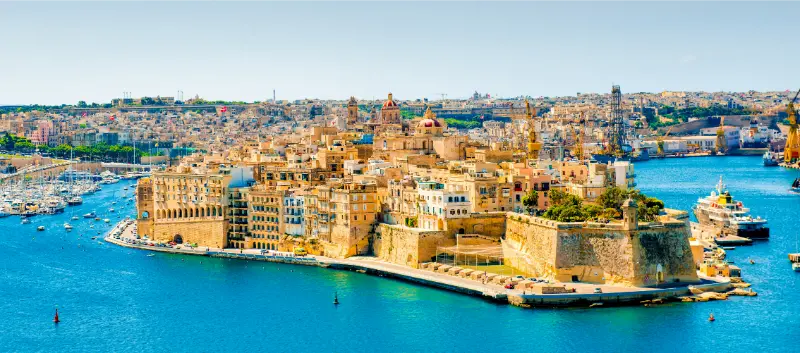
You do not need to visit every museum. Walk Birgu slowly, go down to the marina and choose Fort St Angelo only if you still have the energy for another paid attraction. Otherwise, use the afternoon for streets, waterfront views and coffee. The Three Cities feel different from Valletta even though they face it across the water.
Day 1 evening: harbour light instead of another transfer
Return toward Valletta or Sliema for dinner. The first evening is not the moment to add Mdina simply because it looks romantic at night. Save it for Day 2 when you can see both the city and Rabat properly.
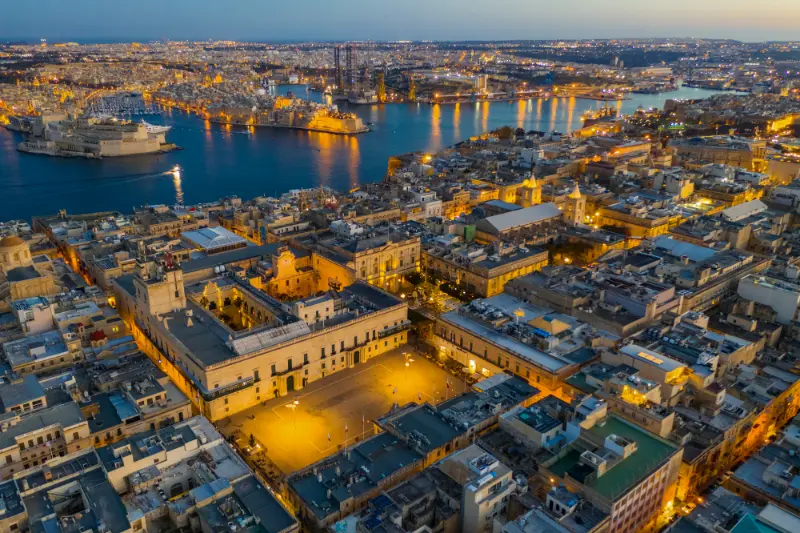
If you stay in Valletta, walk the quieter streets after dinner. If you stay in Sliema, the view back toward the illuminated capital is one of the most rewarding free experiences of a short trip. St Julian’s visitors can finish around Spinola Bay or continue into Paceville if nightlife is part of the weekend.
Day 2 morning: Mdina before the main crowds
Travel to Mdina early and enter through the main gate before the busiest day-trip period. The old capital deserves a slower pace than many itineraries allow. Walk toward the bastions, look into side streets and pay attention to the change in sound as you move away from the main route.
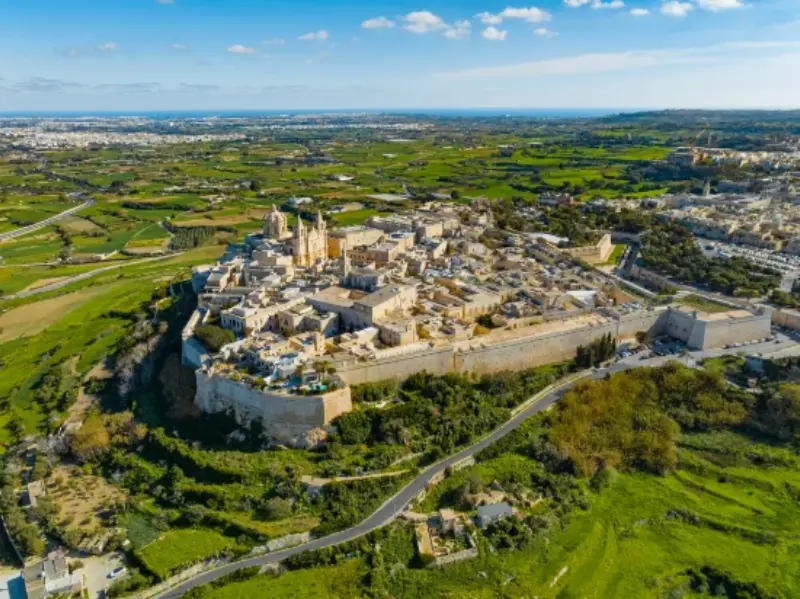
Choose one interior only if it genuinely interests you. The cathedral and museum are natural options, while Palazzo Falson adds a more intimate historical perspective. If you spent Day 1 in museums, make Mdina your outdoor morning and preserve the contrast.
Day 2 late morning: Rabat is part of the visit
Continue into Rabat rather than returning immediately to the bus stop. St Paul’s Catacombs are one of Malta’s important archaeological attractions and can justify a full visit. The town also has cafés, churches and everyday streets that make the historic centre feel less staged.
Rabat is a good place for an early lunch because you can decide afterward how ambitious the final afternoon should be. This is where the itinerary branches depending on season, weather and your interests.
Day 2 option A: Golden Bay and Għajn Tuffieħa
In warm, stable weather, finish the trip by the sea. Golden Bay is easier for many visitors, while Għajn Tuffieħa rewards the descent with a more dramatic setting. Swimming conditions vary, and the staircase at Għajn Tuffieħa matters if mobility or fatigue is an issue.
Do not schedule a beach purely because “Malta means beaches.” In winter or on a windy day, the same hours may be better used elsewhere. If you do go, leave enough time to return, shower and collect luggage before the airport.
Day 2 option B: Mosta and central Malta
If the weather is uncertain or you prefer architecture, stop at Mosta Rotunda. The dome, church interior and Second World War story make it a useful central-Malta addition without committing to a long coastal detour.
Mosta also fits well if your route back to the airport or accommodation passes through central Malta. The point of this second-day branch is to use geography intelligently rather than forcing the same itinerary in every season.
Day 2 option C: more Valletta, not more kilometres
If Day 1 felt rushed, return to Valletta and finish what you skipped. Casa Rocca Piccola, the National Museum of Archaeology, Lower Barrakka or simply another harbour walk may give you more value than adding a new town.
Short trips improve when you allow yourself to repeat a place. Seeing Valletta in both morning and evening light is not wasted time. It often creates a deeper impression than visiting another attraction for forty minutes.
A guided Valletta, Mdina or full-day Malta tour can simplify transport and historical context when time is limited.
Browse Malta tours on GetYourGuideTechnically yes, but I would not make it the default first-time plan. A Comino boat trip takes a large share of one day and is weather-dependent. If swimming and boat scenery are your main reason for coming, replace the Mdina afternoon or even dedicate Day 2 to Comino. Do not try to add Blue Lagoon on top of the historical itinerary.
The same applies to Gozo. A full Gozo day is possible, but it would leave you with only one day for Malta itself. That can work on a repeat visit; for a first weekend, Malta’s main island deserves more balance.
Transport strategy for a two-day trip
Public buses can cover this itinerary, especially Valletta–Mdina and major tourist areas. Harbour ferries are useful where operating. Taxis and ride-hailing become valuable when they save a connection at the end of a short day. The best approach is usually mixed rather than ideological: use public transport for straightforward routes and pay for a faster transfer when it protects an hour you actually care about.
A rental car is not essential and can be inconvenient in Valletta. It becomes more attractive if your second-day priority is a beach, rural coast or several locations outside the main transport corridors. If renting, read the parking guide before assuming you can stop beside every attraction.
What to book before the weekend
Book accommodation first, then any attraction you consider non-negotiable. Check official opening information for religious sites because ceremonies and special events can affect visitor access. If you have an early flight home, arrange the airport journey the previous day rather than relying on a last-minute decision.
Keep restaurant reservations limited. One special dinner can anchor the trip; booking every meal removes the flexibility that makes a short itinerary resilient.
Two days with children
Reduce the number of interiors and preserve breaks. Valletta plus the Three Cities can work on Day 1, but young children may enjoy a harbour crossing more than another museum. On Day 2, Mdina in the morning followed by the Malta National Aquarium or a family-friendly beach can be easier than a long archaeological programme.
The family version should contain fewer “musts,” not more. Heat, stairs and waiting time matter more than distances on the map.
Two days without a car
This itinerary is particularly suitable without a car. Stay in Valletta or Sliema, use buses for Mdina/Rabat, harbour crossings where practical and an occasional taxi if it prevents a long wait. Carry water and keep the transport app available, but avoid planning connections so tightly that one delay ruins the day.
If your flight arrives late, the best adjustment is to protect Day 1 morning rather than trying to “make up” a missing evening with extra stops.
Frequently asked questions
Is two days enough for Malta?
It is enough for Valletta, the Grand Harbour and Mdina/Rabat at a satisfying pace, plus one flexible beach or central-Malta experience. It is not enough for Malta, Gozo and Comino in depth.
Should I stay in Valletta or Sliema?
Valletta is stronger for history and evening atmosphere; Sliema offers broad accommodation choice and excellent harbour access. Both are practical for 48 hours.
Can I visit Gozo in two days?
Yes, but doing so means sacrificing much of the main-island itinerary. I would save Gozo for a longer first trip unless it is your main priority.
What is the best two-day itinerary in winter?
Valletta and the Three Cities on Day 1, then Mdina, Rabat and Mosta on Day 2. Keep a museum or café alternative ready for rain.
Final 48-hour plan
Day 1 should explain Malta’s relationship with the Grand Harbour: Valletta, one major attraction and the Three Cities. Day 2 should change the mood: Mdina and Rabat first, then a beach, Mosta or extra Valletta time depending on conditions.
That structure is simple for a reason. It gives you two coherent days instead of a collection of disconnected stops. For a short weekend, coherence is what turns a busy schedule into an actual trip.