

Malta’s best swimming places are not all sandy beaches. The islands mix long shallow bays, orange-red sand, rocky platforms, natural pools and clear-water coves. Choosing well means matching the place to your needs: toddlers need easy access and shallow water; confident swimmers may prefer rocky coves; photographers may care more about cliffs and sunset than facilities.
Wind matters too. A famous bay can be unpleasant on the wrong day while a less celebrated spot on the opposite coast is calm. Use this guide as a shortlist, then check conditions locally before swimming.
Plan a beach-focused Malta trip
Compare current options before you book. Availability and prices can change by date.
Affiliate links: My Malta Trip may earn a commission at no extra cost to you.
1. Mellieħa Bay (Għadira Bay) — best for families
Mellieħa Bay is one of the most practical sandy beaches in Malta. The bay is long, access is straightforward and the water is generally shallow close to shore. That makes it a strong choice for families and travellers who want a conventional beach day with facilities nearby. It can become busy in summer, so arrive early or later in the afternoon.
2. Għajn Tuffieħa — best scenery
Għajn Tuffieħa combines reddish sand with a dramatic natural setting. Reaching the beach involves a long staircase, which is part of the reason it feels less urban than easier-access bays. The climb back up is the detail many visitors underestimate, especially in midday heat. Bring water and keep footwear on for the stairs.
3. Golden Bay — easiest classic beach day
Golden Bay sits close to Għajn Tuffieħa but has easier access and more developed facilities. It is a good choice if you want sand, swimming and a sunset without a steep descent. Because it is convenient, it is also popular.
4. Paradise Bay — compact and clear
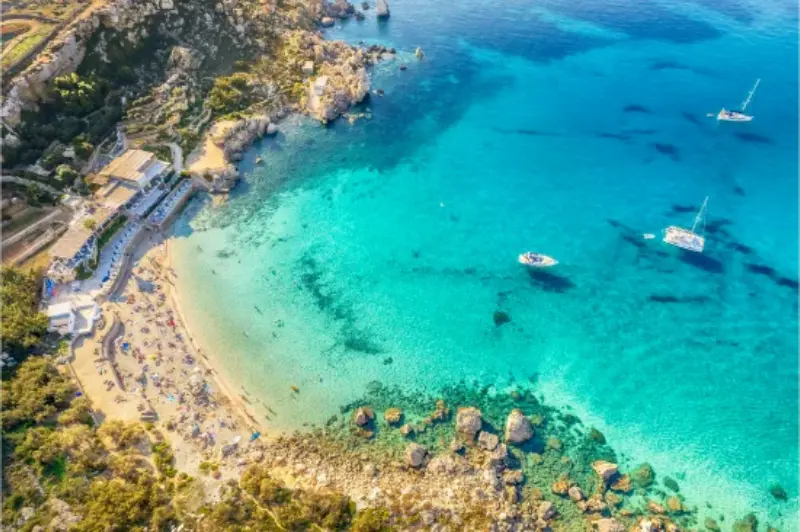
Near Ċirkewwa, Paradise Bay is a smaller sandy cove with clear water in good conditions. It fits naturally into a north-Malta day or an itinerary involving the Gozo ferry area. Space is limited compared with Mellieħa Bay, so timing matters.
5. Armier and Little Armier — north-coast alternatives
The Armier area gives you open views toward Comino and Gozo and a more local summer atmosphere. Facilities vary and the setting is less polished than resort beaches, but the water can be excellent when conditions cooperate.
6. St Peter’s Pool — for strong swimmers and rocky access
St Peter’s Pool near Marsaxlokk is a natural rocky swimming area rather than a beach. It looks beautiful in photographs, but the practical side matters: limited shade, uneven access and open-water conditions. It is not my first recommendation for families with very young children.
7. Ġnejna Bay — a quieter western option
Ġnejna sits below rural western Malta and mixes sand, pebbles and boathouses. It can feel calmer than the most famous beaches, though access and facilities are more limited. It is best for travellers with flexible transport and a willingness to trade convenience for atmosphere.
8. Blue Lagoon, Comino — extraordinary colour, extraordinary popularity
The Blue Lagoon is visually spectacular, but it should be planned as an excursion rather than treated like a normal local beach. Malta has a visitor booking system for access, so check the current official Blue Lagoon information before you go. Early time slots and off-peak months offer a more relaxed experience.

9. Ramla Bay, Gozo — the island beach worth crossing for
Ramla Bay’s reddish-gold sand and broad valley backdrop make it distinct from most beaches on Malta. If Gozo is already in your itinerary, it is one of the easiest beach stops to combine with the Citadel or north-east sights. Read our Gozo guide for a sensible route.
10. Xlendi Bay, Gozo — swim and dine in one stop
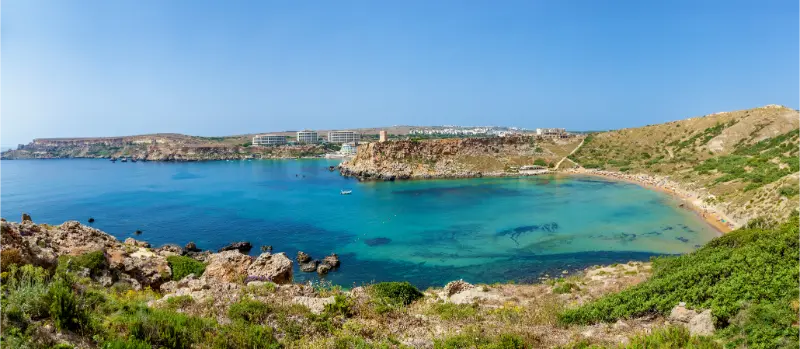
Xlendi is less about a wide sandy shore and more about the bay itself. Platforms and access points allow swimming, and restaurants sit close to the water. It works well for travellers who want a swim followed immediately by lunch or sunset dinner.
11. Sliema’s rocky swimming spots — best without leaving town
If you stay in Sliema, you do not necessarily need to travel across the island for every swim. The rocky shoreline has ladders and bathing areas used by locals. It is a practical option for a morning swim before sightseeing, though sea conditions and slippery rock require attention.
12. St George’s Bay — urban and convenient
St George’s Bay in St Julian’s is an urban sandy beach rather than a scenic wilderness. Its strength is convenience for travellers staying nearby. Use it when you want an easy swim without turning the day into an excursion.
Which Malta beach is right for you?
| Families with young children | Mellieħa Bay |
| Scenery and sunset | Għajn Tuffieħa or Golden Bay |
| Rocky swimming | St Peter’s Pool or Sliema coast |
| Gozo beach day | Ramla Bay |
| Comino experience | Blue Lagoon with current booking requirements |
| Easy resort access | Golden Bay, Mellieħa Bay, St George’s Bay |
Beach safety and sea conditions
The Mediterranean can look calm from a viewpoint and still produce difficult conditions at a rocky entry point. Pay attention to flags, local warnings and boat traffic. Avoid jumping from rocks unless you know the depth and local conditions. On exposed coastlines, waves can make exits more difficult than entry.
What to bring
- High-factor sunscreen and a hat; shade can be scarce.
- More water than you think you will need.
- Water shoes for rocky entries if you are not used to them.
- A dry bag or waterproof pouch if you swim from rocks.
- A light cover-up for buses and cafés.
- Snorkel gear for calm coves, but never use it as a substitute for checking sea safety.
Where to stay for beaches
For a beach-first holiday, Mellieħa is usually more convenient than Valletta. St Paul’s Bay and Buġibba offer resort infrastructure and access to the north, while Sliema and St Julian’s work for travellers who want urban life plus swims from rocky shores. Our where to stay in Malta guide compares these bases in detail.
Best season for swimming
The main swimming season runs from late spring into autumn, with the sea warmest after the heat of summer. September is particularly attractive because the water remains warm while sightseeing becomes more comfortable. In shoulder months, weather can be beautiful but changeable, so keep your beach day flexible.
Frequently asked questions
Does Malta have sandy beaches?
Yes, but they are not everywhere. Malta has sandy bays as well as a large number of rocky swimming areas. If sand is essential, choose your accommodation accordingly.
Are Malta beaches free?
Many swimming areas and beaches are publicly accessible, while sunbeds, umbrellas, parking or beach-club facilities may cost extra. Always check local signage and current access conditions.
Which beach is easiest from Valletta?
For a proper sandy beach, you will usually travel north or west. If you simply want a swim, the harbour and Sliema side can be more practical. Valletta itself is primarily a cultural base rather than a beach resort.
How wind changes the best beach
Malta’s coastline faces several directions, which is useful because wind that makes one coast rough may leave another side calmer. Before committing to a beach, check a reliable marine forecast and look at local conditions. This is especially important for rocky swimming areas where getting out of the water can become difficult when waves build.
For families and weaker swimmers, do not choose by water colour alone. A beach with slightly less dramatic scenery but easier entry, lifeguard presence and nearby facilities can produce a much better day than a remote cove reached by a difficult path.
Beach clubs, sunbeds and free space
Many popular bays have seasonal sunbed and umbrella rental, while other stretches remain open for visitors who bring their own towel. Prices vary by operator and season. If you prefer free space, arrive early and be prepared to carry shade. In peak summer, the most convenient sections can fill quickly.
Rocky urban swimming areas usually have fewer conventional beach facilities, but they can be ideal for a quick swim from Sliema or St Julian’s. Check ladders before entering and remember that wet limestone can be extremely slippery.
Best beaches for sunset
The west-facing bays, especially Golden Bay and Għajn Tuffieħa, are natural sunset choices. If sunset is your main goal, arrive well before the sun drops, because parking and viewpoint space can become busy. Stay for 15–20 minutes afterward: the sky and limestone often continue changing colour after the sun disappears.
Best beaches without a car
Mellieħa Bay, Golden Bay and several urban swimming areas are reachable by public transport, though travel times depend on your base. A direct bus is usually comfortable; a route requiring multiple changes may justify a taxi, especially for families carrying beach equipment. Use our Malta transport guide to compare options.
Final thoughts
Malta’s coastline is best understood as a menu of swimming styles. Do not search for a single “best beach.” Choose the bay that fits the wind, your transport, your swimming confidence and the kind of day you want. That flexibility is what turns a good Malta beach day into a great one.
[…] For a classic sand day, travel north toward Mellieħa Bay, Golden Bay or Għajn Tuffieħa. Our best beaches in Malta guide compares the main […]