

Sliema is one of Malta’s easiest bases, but “Sliema” on a hotel search covers several very different experiences. Stay near the ferry and Valletta becomes your neighbour across the water. Stay toward Balluta and you are closer to St Julian’s. Choose the exposed seafront and you gain swimming access and views, while an inland street may be quieter and cheaper.
This guide breaks Sliema into practical zones and explains what to check before booking. It is designed for travellers who want convenience without accidentally choosing the wrong side of town for their priorities.
Compare Sliema stays
Compare current options before you book. Availability and prices can change by date.
Affiliate links: My Malta Trip may earn a commission at no extra cost to you.
At a glance
| Area | Best for |
| Sliema Ferries | Valletta access + transport |
| Tigné / Point area | Modern feel + shopping |
| Tower Road seafront | Views + rocky swimming |
| Balluta end | St Julian’s access + evening walks |
| Gżira edge | Value + central location |
Why Sliema works so well for first-time visitors
Sliema combines accommodation choice, restaurants, bus routes, ferries, shops and a long seafront in one compact urban base. It does not have Valletta’s historic beauty or Mellieħa’s sandy beaches, but it makes daily logistics easy. That trade-off is exactly why so many first-time visitors stay here.
You can cross to Valletta by ferry, walk toward St Julian’s, swim from rocky platforms, join boat tours and find a wide range of hotels. For a car-free trip, that flexibility is extremely valuable.
Sliema Ferries: best for Valletta and day trips
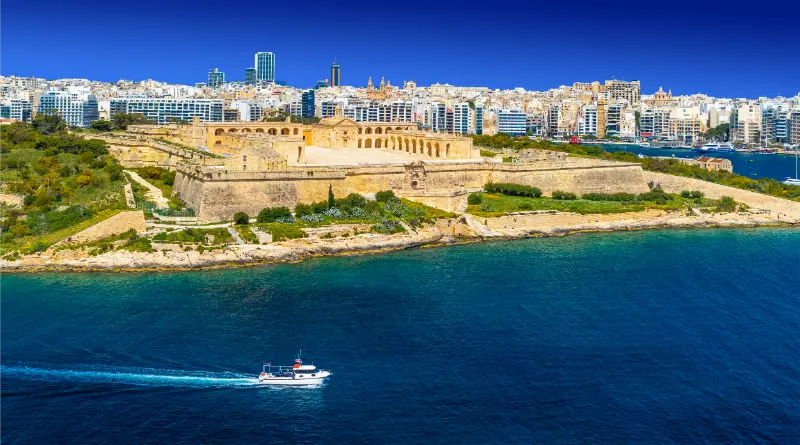
The area around the Sliema ferry landing is the strongest all-round location if you expect to visit Valletta more than once. The harbour crossing is faster and more scenic than travelling around by road when services are operating. Bus connections and excursion departures are also concentrated nearby.
The downside is activity. Traffic, tour operators, restaurants and people moving through the waterfront can make it busy. Ask for a higher or rear-facing room if noise matters more than the view.
Tigné and The Point area: modern and polished
The Tigné peninsula feels more contemporary, with apartment developments, shopping and open harbour views. It suits travellers who prefer modern buildings and easy access to retail over traditional streets. Parts of the waterfront also provide excellent views toward Valletta.
Check whether your chosen property is on a steep connecting street. Sliema is not uniformly flat, and the climb away from the water can surprise travellers carrying luggage.
Tower Road and the open seafront
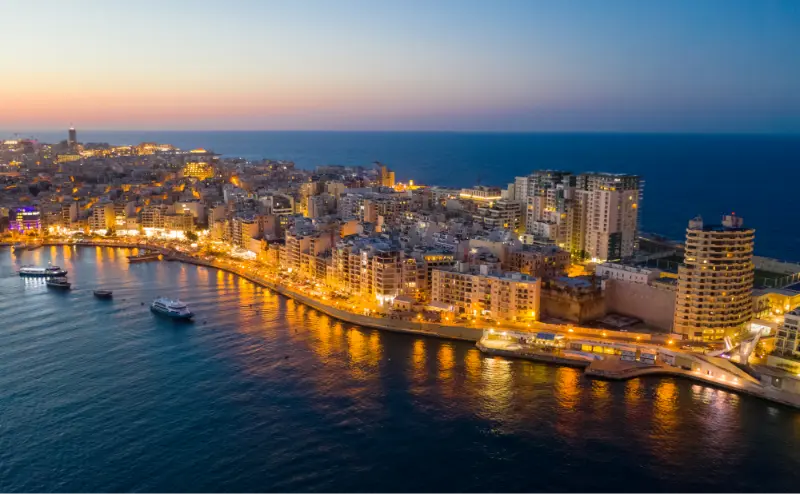
The long seafront facing the open Mediterranean is good for morning walks, rocky swimming and sea views. It feels less like a harbour transport hub and more like a coastal promenade. Confident swimmers can enjoy quick access to the water without travelling to a sandy beach.
Exposure is the trade-off. Wind and waves can make the coast feel very different from the sheltered harbour side. Traffic noise can also be noticeable in front-facing rooms. A sea-view balcony is valuable only if you will tolerate the road below it.
Balluta end: best if you like St Julian’s too
The northern end near Balluta works well for travellers who want to walk into St Julian’s for dinner without sleeping in Paceville. The promenade links the areas naturally, and evenings can be lively without the same concentration of clubs.
This is a smart compromise for couples or friends who want restaurants and bars but still value sleep. Read our St Julian’s guide before deciding how close you actually want to be to the nightlife district.
Gżira edge: often better value
Properties marketed as Sliema sometimes sit close to the Gżira boundary. This can be excellent value because you remain near the waterfront and transport while room rates may be lower than prime Sliema seafront addresses.
The exact street matters more than the municipal label. Look at walking time to the ferry, bus stops and your likely evening restaurants. A well-positioned Gżira room can be more practical than a nominal Sliema hotel at the far end.
Sliema for swimming
Sliema’s coast is mainly rocky. In summer, ladders and swimming areas allow easy access to clear water, but this is different from a sandy beach. Older children and adults who swim confidently often love the convenience; toddlers and anyone who needs gradual entry may prefer day trips to Mellieħa or Golden Bay.
Sea conditions change. If waves are hitting the rocks strongly, do not enter simply because people swam there yesterday. Use our family beach guide if sand and easier entry are priorities.
Transport from Sliema
Sliema is excellent without a car but road traffic can slow buses. Use ferries when they match your route, especially for Valletta, and avoid scheduling timed attractions immediately after a long cross-island bus trip. The official Tallinja planner is more reliable than memorising route numbers months in advance.
For the airport, compare current direct bus services, regular buses and taxi cost. With several travellers and luggage, a taxi can be worth the difference even if public transport is cheaper.
Should you rent a car in Sliema?
Usually not for the entire stay. Parking is limited and urban driving adds stress to a location chosen precisely because transport is convenient. If you want a car for one rural day, rent it only for that period rather than paying to keep it parked.
Our Malta without a car guide shows how much of a first trip can be covered from Sliema using ferries, buses and occasional taxis.
What type of hotel works best?
Sliema offers everything from large seafront hotels to apartments and simple guesthouses. Large hotels are useful for pools, lifts and predictable services; apartments work for longer stays; smaller properties can be good value but vary more in facilities.
Compare current rates on Booking.com, then read the most recent reviews for lift reliability, construction noise, air conditioning and breakfast crowding. Malta’s urban landscape changes, so a five-year-old “quiet street” review may no longer be relevant.
Sliema for couples, families and solo travellers
Couples benefit from the promenade, restaurants and easy Valletta evenings. Families benefit from transport and supermarkets but should choose accommodation carefully if children need sandy beaches. Solo travellers appreciate the ability to walk to dinner and reach many areas without a car.
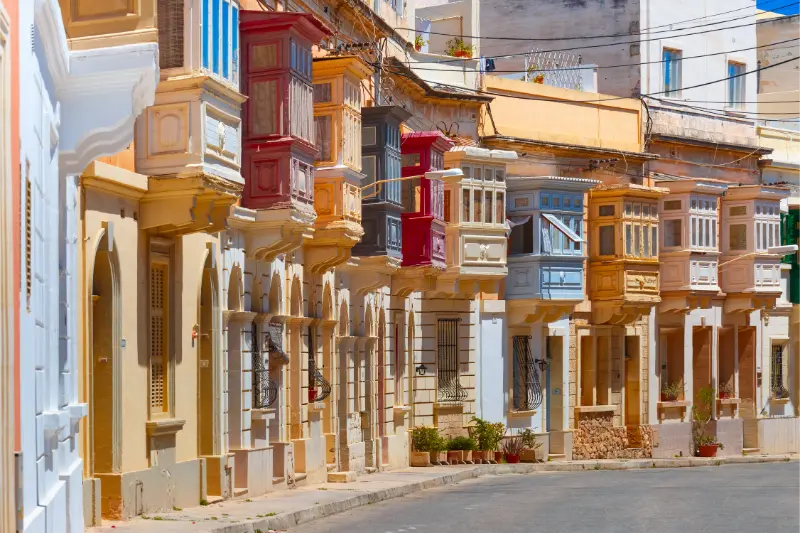
The main group I would steer elsewhere is travellers seeking old-town romance. Valletta or a Gozo village will feel more distinctive. Sliema wins on usefulness rather than charm.
How many nights?
Four to seven nights works well if Sliema is your only Malta base. You can day trip to Valletta, Mdina, Gozo and beaches without moving luggage. For a more atmospheric trip, split the stay: three or four nights in Sliema plus two or three nights on Gozo is a strong combination.
Changing hotels every two nights is unnecessary on islands this small. Move only when the second base offers a genuinely different experience.
A realistic Sliema stay
For a five-night Sliema base, use one day for Valletta by ferry, one for Mdina, one for Gozo or the north, and keep at least one half-day for the promenade and swimming close to the hotel. This makes use of Sliema’s convenience instead of treating it as a bus station with bedrooms.
If your room has a balcony or rooftop access, schedule one slow breakfast or sunset there. A practical base feels much more memorable when you actually use the waterfront setting rather than leaving at 08:00 every morning and returning after dark.
When Valletta is a better choice
Choose Valletta if waking up inside a historic city is one of the reasons you came to Malta. The capital is more atmospheric after dark and puts museums and architecture outside the hotel door.
Sliema is better when you want a practical base for multiple directions. A split stay is rarely necessary because the ferry makes the two towns close, so choose one according to what you want your mornings and evenings to feel like.
For travellers with early departures, also compare the walk from your hotel to the airport-bus stop or likely taxi pickup point. Sliema is compact on a map, but luggage, hills and busy roads can make an extra ten minutes more important than it looks when you are leaving before breakfast.
Frequently asked questions
Is Sliema a good place to stay for a first trip to Malta?
Yes. It is one of the easiest bases because of ferries, buses, restaurants, shops and a wide range of accommodation. It is especially strong for travellers who do not plan to rent a car.
Which part of Sliema is best for Valletta?
The Sliema Ferries area is the most convenient for regular crossings to Valletta. Check the current ferry timetable because service hours vary and ferries are not an all-night connection.
Does Sliema have a sandy beach?
Sliema is mainly known for rocky swimming areas rather than large sandy beaches. If sand is essential, consider Mellieħa or plan beach day trips.
Is Sliema quieter than St Julian’s?
Generally yes, especially away from the Balluta/St Julian’s end, but Sliema is still a busy urban area. Road traffic, restaurants and construction can create noise, so read property-specific reviews.
Final thoughts
Stay near Sliema Ferries for transport, toward Balluta for St Julian’s access, on the open seafront for swimming and views, or near Gżira for value. Sliema is not Malta’s most romantic base, but for a first trip without a car it is one of the hardest locations to beat.