

Sliema is one of the easiest places in Malta to use as a practical base. It is not the island’s most romantic historic town and it does not have a conventional sandy beach, but it gives you a long waterfront, frequent transport, restaurants, shopping, swimming from rocky shorelines and one of the simplest ferry connections to Valletta. For travellers who want to see a lot of Malta without changing hotel, that combination is powerful.
The mistake is treating Sliema only as somewhere to sleep. The promenade, harbour views and backstreets are worth time of their own, especially early in the morning and around sunset. This guide explains what to do, where to stay, how to use the ferry, where swimming works and which parts of Sliema feel different from one another.
Book from Sliema
Compare current options before you book. Availability and prices can change by date.
Affiliate links: My Malta Trip may earn a commission at no extra cost to you.
Who should stay in Sliema?
Sliema suits first-time visitors who want convenience, couples who prefer restaurants and evening walks to nightlife clubs, solo travellers who value transport links and families who want an urban base with plenty of services. It is especially useful if your itinerary includes several days in Valletta but you prefer modern hotels and waterfront views rather than staying inside the capital.
It is less ideal if your dream holiday is to walk directly from the hotel onto a sandy beach every morning. For that, Mellieħa or another northern base makes more sense. Sliema’s sea access is mainly from rock platforms and lidos.
The Sliema waterfront: more than one promenade
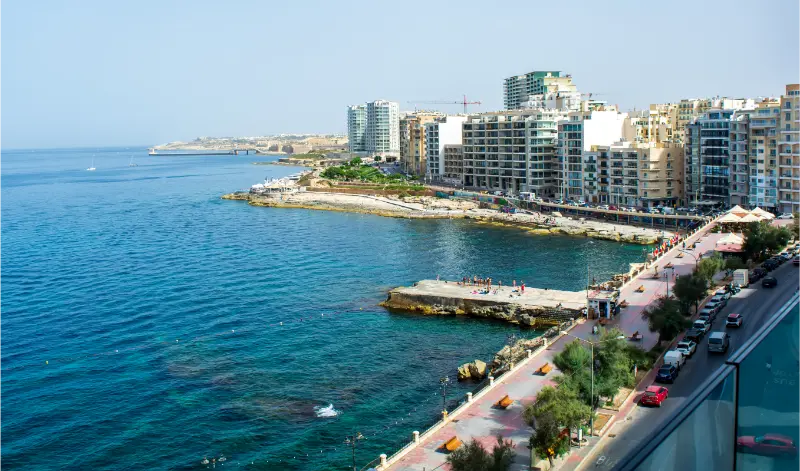
Sliema stretches around different sides of a peninsula, and the feel changes as you walk. The Strand faces toward Manoel Island and Valletta and is the transport-heavy side, with ferries, buses, shops and restaurants. Continue around toward Tigné Point and the view opens dramatically across Marsamxett Harbour. On the opposite side, the promenade toward Exiles and St Julian’s feels more residential and is better for a long walk beside open sea.
Take the ferry to Valletta
The Sliema–Valletta ferry is one of the reasons I like Sliema as a base. The crossing is short, scenic and often more pleasant than sitting in traffic. Valletta Ferry Services currently operates a summer timetable through the end of October and a winter schedule from November through May; services can change because of weather or harbour events, so check the official Valletta Ferry Services timetable before relying on a specific sailing.
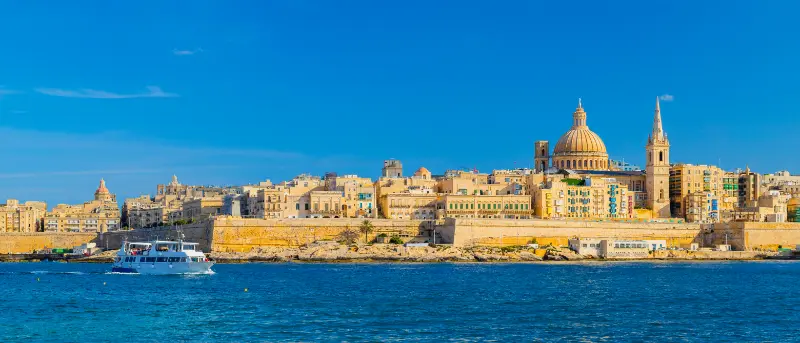
If you are visiting Valletta for the day, take the ferry over in the morning and consider returning after dinner. Seeing the fortified skyline from the water is part of the experience, not merely transport. Our Valletta travel guide gives you a walking route once you arrive.
Walk to Tigné Point for one of the best Valletta views
Tigné Point is modern and polished, but the waterfront path gives you a superb angle toward Valletta’s bastions. Come near sunset when the limestone begins to glow. This is also a useful place for travellers who want shops, cafés and an easy stroll without committing to a formal attraction. Photographers should return at blue hour, when the city lights start to reflect across the harbour.
Swim from the rocky shoreline
Sliema’s coast has ladders and rocky bathing places rather than broad sand. On calm days, this can be excellent for a quick swim because you can combine it with a city day and avoid a long transfer to a beach. The water becomes deep quickly in places, so it is not the same kind of environment as shallow Mellieħa Bay. Water shoes help, and you should always use established access points rather than improvising on slippery rock.
Continue on foot toward St Julian’s
One of Sliema’s easiest free activities is simply walking the seafront toward St Julian’s. The route passes cafés, swimming spots and residential streets before reaching Balluta and eventually Spinola Bay. If you enjoy walking, it is a good way to understand how the central coastal towns join together. You can eat in St Julian’s and return by bus or on foot.
Shopping and rainy-day options
Sliema is one of Malta’s main shopping areas, which makes it useful on a rare wet or windy day. The Point Shopping Mall at Tigné Point is the obvious modern option, while the streets around Bisazza Street and The Strand have a mixture of chains, pharmacies and everyday services. I would not plan an entire Malta day around shopping, but it is convenient to have these facilities close to your hotel.
Where to eat in Sliema
For Maltese cooking in an informal setting, Ta’ Kris Restaurant is a long-running option in the Sliema/Gżira area and is known for traditional dishes such as rabbit and bragioli. It is at 154 A/B, The Strand, Triq ix-Xatt. Book ahead at busy times rather than assuming a table will be available. For a lighter meal, the promenade has plenty of cafés, but I would walk one or two streets inland before choosing; waterfront position and food quality do not always rise together.
If you are writing a food list for the whole trip, our Maltese food guide covers pastizzi, ftira, rabbit, ġbejniet and other things worth tasting beyond the obvious tourist menus.
Where to stay in Sliema
The best micro-location depends on your priorities. Stay near The Strand if the Valletta ferry and bus connections matter most. Choose the Tigné side for a more polished waterfront feel and easy access to shopping. Stay farther north toward Exiles if you want a quieter promenade and frequent walks toward St Julian’s. Because Sliema is elongated, a hotel that looks “central” on a map may still be a 20-minute walk from the ferry.
For a comfortable full-service option, AX The Palace Malta is on Triq il-Kbira in Sliema and offers pools, restaurants and spa facilities. Compare it with smaller boutique properties before booking. You can check current rates through Booking.com, but use our where to stay in Malta guide to decide whether Sliema is the right area first.
Getting around from Sliema
Buses connect Sliema with St Julian’s, northern beaches and other parts of Malta, although traffic can make journey times variable. In summer 2026, Malta Public Transport increased frequencies on several coastal routes, including services linking Sliema with Buġibba and Ċirkewwa. Use the official journey planner on the day rather than copying an old route timetable from a blog.
For Valletta, use the ferry when conditions allow. For Mdina and Rabat, a direct or connecting bus is usually easier than returning to Valletta by boat first. For Gozo, buses toward Ċirkewwa work, but if your day is important and you are travelling as a group, compare the cost of a taxi or ride-hailing transfer with the time saved.
Is Sliema good without a car?
Yes. In fact, Sliema is one of the places where I would be least inclined to rent a car for the entire holiday. Parking can be frustrating, the ferry to Valletta is excellent, and buses cover the main tourist corridors. Rent a car only for the days when it genuinely improves your itinerary, such as a rural Gozo day or a route across Malta’s quieter western coast.
A relaxed day in Sliema
- Start with coffee near The Strand before the waterfront becomes busy.
- Walk to Tigné Point for morning views across to Valletta.
- Take the ferry to Valletta for two or three hours if you have not visited yet, or stay in Sliema for shopping and backstreets.
- Return for lunch away from the busiest waterfront terraces.
- Swim from an established rocky bathing area if the sea is calm.
- Walk toward Balluta Bay in the late afternoon.
- Have dinner in Sliema or continue to Spinola Bay in St Julian’s.
Sliema with children
Families appreciate the flat sections of promenade, supermarkets, pharmacies and transport. The drawback is the lack of easy sandy shoreline. If your children are happiest with shallow water and sand, combine an urban Sliema base with planned beach days rather than expecting the local coast to serve the same purpose. See Malta with kids for family attractions and beach suggestions.
Frequently asked questions
Is Sliema a good base for a first trip to Malta?
Yes, especially if you value transport, restaurants and an easy connection with Valletta. It is less atmospheric than sleeping inside Valletta or Mdina, but it is one of the most practical bases for travellers who want to move around without a car. The promenade also makes evenings easy: you can walk for dinner or a drink without planning another sightseeing transfer.
Can you swim in Sliema?
Yes, but most swimming is from rocky platforms rather than sandy beaches. In calm weather the lidos and rock-cut access points along the seafront are popular with locals and visitors. Wear water shoes if you are uncomfortable on rock, check the sea before entering and do not assume that a sunny day means the water is suitable everywhere.
Should I stay in Sliema or Valletta?
Choose Valletta for historic atmosphere and immediate access to major sights; choose Sliema for a wider choice of modern accommodation, a long waterfront, easier access toward St Julian’s and a generally more residential evening rhythm. The ferry means you can enjoy both, so the better choice often depends on the hotel and the kind of evenings you want.
How many days do you need in Sliema?
You do not need several full sightseeing days just for Sliema. One relaxed day is enough for its promenade, swimming and local streets, but it works very well as a base for four to seven nights because Valletta, St Julian’s and many bus routes are close. Treat Sliema as a convenient home base rather than a checklist destination.
Final thoughts
Sliema is not the place I would choose for medieval atmosphere, but it may be the place I would choose for an efficient first Malta trip. The ferry makes Valletta feel close, the promenade gives every day an easy beginning or ending, and the concentration of transport and services removes friction from a busy itinerary. Use Sliema as more than a bedroom and it becomes a very satisfying base.