

Malta is not a street-food destination in the same mould as Bangkok or Istanbul. The most rewarding quick foods are often found in pastizzerias, bakeries, snack bars, markets and village festa stalls rather than rows of permanent street carts. Once you adjust your expectations, the islands become excellent for grazing: a pastizz in the morning, bread or ftira at lunch, an imqaret at a festa and a proper dinner later.
The advantage is practical as well as culinary. Quick local food fits naturally between Malta’s compact attractions and reduces the need to spend every lunch hour in a restaurant. It can also be one of the cheapest ways to taste genuinely local flavours.
1. Pastizzi: Malta’s essential quick snack
Pastizzi are flaky pastries most famously filled with ricotta-style cheese or seasoned peas. They are sold hot, move quickly through busy counters and are easy to eat on the go. A fresh pastizz should be crisp enough to scatter pastry flakes with every bite.
Try the classic fillings before chasing novelty versions. If you want the deeper story, our dedicated pastizzi guide covers how to order them and what to expect in a pastizzeria.
2. Qassatat: the sturdier pastry cousin
Qassatat are savoury pastries often filled with ricotta, peas or spinach-style mixtures. Their pastry is generally more robust and less explosively flaky than pastizzi, making them easier to carry. The exposed filling in the centre also makes them visually easy to distinguish in many bakery displays.
They are useful when you want something more substantial but still fast. A qassata and drink can bridge the gap between breakfast and a late lunch without becoming a heavy meal.
3. Ftira and ħobż biż-żejt
Maltese ftira is a traditional flattened sourdough bread culture recognised by UNESCO. Filled versions commonly use tomatoes, olive oil, olives, capers, tuna or anchovies, onion, herbs and cheese. Ħobż biż-żejt follows the same Mediterranean logic: bread, tomato and oil become the base for salty local ingredients.
These are among the best lunch options when you have a long sightseeing day because they travel better than hot pastry. For the distinction between Maltese bread and the baked flatbread associated with Gozo, see our ftira guide.
4. Gozitan ftira from a village bakery
Gozo turns ftira into a destination food. Traditional bakeries may bake broad flatbreads topped with sliced potatoes, onions, tomatoes, capers, olives, anchovies or local cheese. Visit Gozo specifically promotes its village bakeries as part of the island’s living food culture.
Buy it fresh and share. Portions can be larger than expected, and sampling two varieties as a group is more interesting than everyone ordering the same combination.
5. Imqaret: date-filled sweetness
Imqaret are fried pastries filled with a spiced date mixture. They are strongly associated with fairs, markets and festas as well as dessert counters. The crisp exterior and dense date centre make one piece surprisingly satisfying.
They are especially good when freshly fried. If you see them being cooked at a stall rather than sitting pre-packed, that is usually the moment to try one. Be careful with the filling: it can stay very hot.
6. Qubbajt and festa sweets
Village festas are good places to encounter qubbajt, Maltese nougat, along with other sweets and seasonal snacks. Food is only one part of a festa, which is primarily a community and religious celebration, so visit respectfully rather than treating the event as a themed food market.
If you are travelling in summer, check the current local festa calendar and build the evening around the procession, decorations and fireworks as well as the snack stalls.
7. Maltese sausage, ġbejniet and snack plates
Not every quick local bite comes wrapped in pastry. Maltese sausage, olives, bigilla, galletti crackers and ġbejniet cheeselets can appear as bar snacks, starters or small plates. A casual wine bar or village bar may offer a better introduction to these foods than a formal tasting menu.
Fresh, dried and peppered cheeselets have different textures and strengths. If a plate offers several, taste them from mildest to strongest rather than starting with the peppered version.
8. Seasonal fish and lampuki pie
When lampuki are in season, you may see the fish used in pies and traditional dishes. Availability is seasonal by definition, so do not expect a “must-try” lampuki item on every trip. This is a good example of why local eating works better when you ask what is actually good now.
The same principle applies to produce, sweets and festa foods. A useful food itinerary follows the season rather than trying to reproduce a fixed internet checklist.
Where to look for street food in Valletta
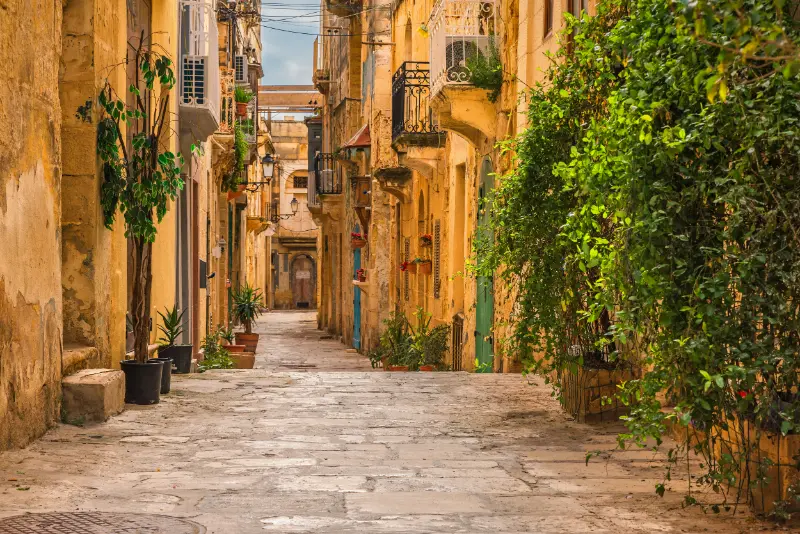
Valletta has plenty of quick-food options because office workers, residents and visitors all need lunch. Explore side streets rather than limiting yourself to Republic Street. A food tour can be useful on your first day because it combines tastings with context and points out places you can revisit independently.
Avoid eating everything the tour is likely to include before it starts. Many current Valletta food tours last several hours and include enough tastings to replace a meal.
Rabat, Mdina and central Malta
Rabat is particularly good for a casual snack stop because it pairs naturally with Mdina and major historic sites. Instead of eating in the most scenic square by default, walk a few streets into Rabat and look for a busy bakery or snack counter.
A pastizz before the catacombs or a ftira-style lunch after Mdina keeps the day efficient and makes the food part of the route rather than a separate expedition.
Street food in Gozo
Gozo’s strength is the bakery. Victoria is convenient and has the greatest concentration of choices, but village bakeries in places such as Nadur make a stronger case for changing your route if food is a priority. Visit Gozo lists traditional bakeries and highlights ftira, qassatat, pies and other baked goods.
If you are taking the ferry back the same day, buy food early enough that you are not depending on one bakery immediately before departure.
Food safety and practical common sense
Choose busy places with visible turnover, especially for foods served hot. Keep dairy-filled pastries out of prolonged summer heat and do not carry them around all afternoon. If you have serious allergies, explain them clearly because small bakeries may use shared surfaces and utensils.
Street food is not automatically lighter than restaurant food. Pastries, cheese and fried sweets add up quickly. Share portions if you want to taste widely without spending the rest of the day recovering.
A one-day Malta street-food plan
- Breakfast: one ricotta and one pea pastizz shared with coffee.
- Late morning: qassata if you are hungry, otherwise wait.
- Lunch: filled ftira or ħobż biż-żejt.
- Afternoon: local soft drink, coffee or a small cheese-and-olive plate.
- Evening: imqaret or festa sweet, then a normal dinner rather than another bakery marathon.
Frequently asked questions
Is street food in Malta vegetarian-friendly?
Many bakery foods have ricotta, pea or vegetable fillings, but recipes vary and pastries may contain animal-derived fats. Ask when it matters.
Can street food replace lunch?
Yes. A filled ftira, qassata or several shared pastries can be enough for a practical lunch, especially in summer when a heavy midday meal is less appealing.
Is a Malta food tour worth it?
For first-time visitors who want context and several tastings without researching individual stops, a well-reviewed walking food tour can be efficient. Independent travellers can then revisit the foods they liked most.
How to avoid a disappointing tasting day
The most common mistake is eating five variations of pastry before noon and then concluding that Maltese food is heavy. Alternate textures and contexts. Follow a pastry with fruit or coffee, choose bread and vegetables at lunch, and leave room for a proper dinner. Sharing is especially useful for couples and families because one person can taste a bite without committing to a full portion.
The second mistake is pursuing famous names at the expense of freshness. A hot qassata from a busy neighbourhood counter can be better than a famous pastry carried across the island for an hour. Let your route lead the food plan, then use quality and turnover to choose among nearby options.
A realistic one-day street-food route without overeating
Begin with one pastizz and coffee rather than ordering several pastries at once. Around lunch, look for a bakery or snack bar serving a filled ftira, ħobż biż-żejt or a savoury pie, then split it if you are also planning a restaurant dinner. In the afternoon, choose something sweet only if it appears naturally on your route — imqaret at a market or festa is more memorable than forcing a dessert stop immediately after lunch.
This pacing gives you variety across texture, temperature and setting. It also leaves time for sightseeing. Malta’s historic centres are compact, but summer heat can make repeated detours feel longer than the map suggests. Choose food close to Valletta, Rabat, Victoria or the village you are already visiting rather than crossing the island for one viral snack.
Markets, festas and temporary stalls: what changes
Temporary food stalls can be one of the most atmospheric places to taste sweets, nuts or quick snacks, especially around village festas and seasonal events. The trade-off is inconsistency: vendors, opening times and exact products change. Treat a stall as a bonus rather than the only meal plan for the day. Carry water and have a backup bakery or café in mind, particularly with children.
At busy events, use the same food-safety judgement you would anywhere: favour stalls with good turnover, food handled cleanly and hot items served properly hot. Malta is not a destination where travellers need to be paranoid about eating locally, but common sense still matters. If something has been sitting in strong sun or does not look freshly handled, choose another counter. The best street-food experience is usually the one that looks busy for a reason.