

Ferries are one of the smartest ways to move around the Maltese Islands because they solve two different problems at once: they can be faster than road transport and they turn a transfer into a scenic part of the day. The most useful visitor routes are Sliema–Valletta, Valletta–Three Cities and the Malta–Gozo connections.
The services are not all operated by the same company and they do not follow identical ticket rules. Valletta Ferry Services runs the harbour crossings, Gozo Channel carries passengers and vehicles between Ċirkewwa and Mġarr, and high-speed passenger services connect Gozo with Valletta and, depending on current network arrangements, other Malta points.
This guide uses the current official 2026 schedules and fares available from the operators. Because ferries are weather-sensitive and seasonal timetables change, always recheck the operator on the day of travel before building a tight connection.
At a glance
- Sliema–Valletta and Valletta–Three Cities are short harbour crossings operated by Valletta Ferry Services.
- Current Valletta Ferry Services daytime adult fare: €3 single or €5 return; children €1 single or €1.50 return.
- Current published night fare on these harbour services: €3.50 single or €5.20 return.
- Gozo Channel operates daily between Ċirkewwa, Malta and Mġarr, Gozo; current published crossing time is about 25 minutes.
- Current Gozo Channel standard passenger fare: €4.65; standard car + driver fare: €15.70.
Which Malta ferries matter most to visitors?
Think of Malta’s ferry network in two layers. Harbour ferries are urban transport: they connect places around Valletta faster and more pleasantly than driving around the harbour. Gozo ferries are inter-island transport and require more planning because they interact with buses, cars, luggage and day-trip timing.
A third layer is tourist boat transport to Comino and Blue Lagoon. Those services are excursions rather than public ferries and are covered more fully in our Best Boat Trips in Malta and Comino & Blue Lagoon guides.
Sliema to Valletta ferry
The Sliema–Valletta ferry is one of the most useful transport shortcuts for visitors staying around Sliema or Gżira. Instead of sitting in road traffic around Marsamxett Harbour, you cross directly to the capital and arrive close to central Valletta.
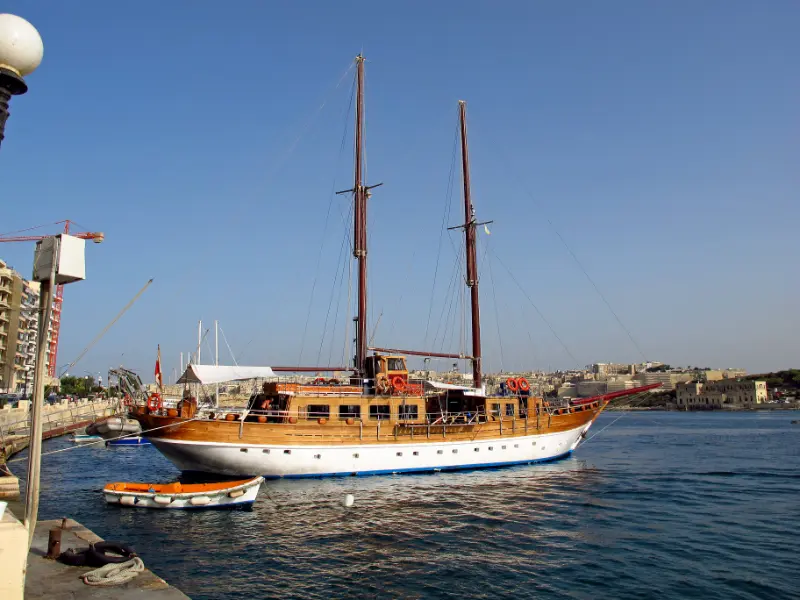
Valletta Ferry Services currently publishes frequent half-hourly daytime departures, with longer summer evening service from June through October. The published 2026 fare is €3 for an adult single and €5 return, while children are €1 single and €1.50 return.
Summer night services have separate pricing, currently €3.50 single and €5.20 return. Always check the exact timetable because Sundays, public holidays and late-night patterns differ from standard weekday operation.
Valletta to the Three Cities ferry
The Valletta–Three Cities crossing links the capital with Cospicua, from where Birgu and Senglea are easily explored on foot. It is the best transport choice for many visitors planning the Three Cities because it avoids a long road loop around Grand Harbour.
The current published timetable runs regular services through the day and later into summer evenings. Fares follow the same daytime and night structure as the Sliema route. From the Valletta waterfront, the Barrakka Lift can help bridge the steep height difference to Upper Barrakka Gardens.
Gozo Channel: Ċirkewwa to Mġarr
Gozo Channel is the traditional ferry linking Malta and Gozo. It carries foot passengers, cars, motorcycles and commercial traffic between Ċirkewwa in north Malta and Mġarr Harbour in Gozo. The current timetable is published as operating daily, with an approximate crossing time of 25 minutes.
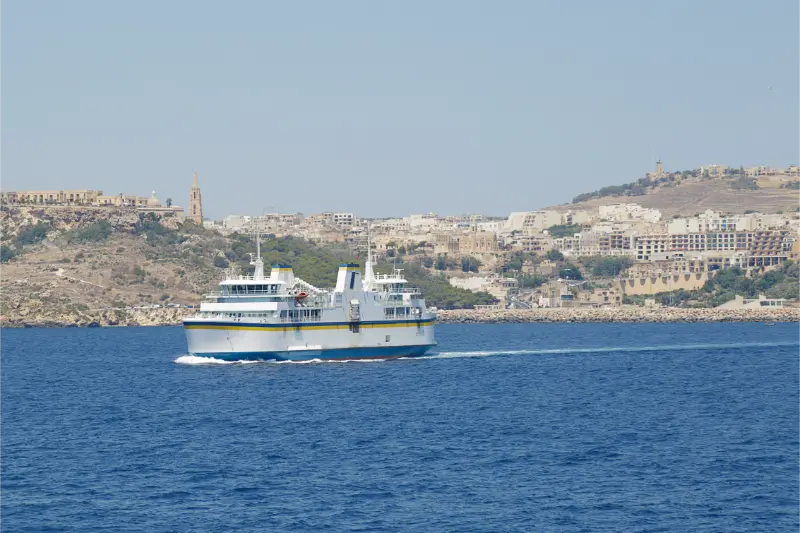
The current standard passenger fare is €4.65, and the current standard car-and-driver fare for vehicles up to 5.3 metres is €15.70. Children aged 3–12 currently pay €1.15, while children aged 0–2 travel free with the required infant ticket.
Ticket validation rules are unusual compared with many ferry systems. Gozo Channel’s current instructions explain that standard foot-passenger tickets are validated at the Gozo terminal on the return/start journey, and vehicle tickets have specific purchase and validation rules. Read the operator’s current instructions instead of assuming you pay in both directions the same way.
Taking a rental car to Gozo
If you already have a rental car, the vehicle ferry is straightforward and lets you explore remote Gozo beaches and villages with less waiting for bus connections. However, confirm that your rental agreement allows travel to Gozo and understand any roadside-assistance limitations.
Cars are not essential for a one-day Gozo trip. Foot passengers can connect from Mġarr by bus, taxi or tour. For a short first visit, leaving the car in Malta can avoid vehicle queues and parking concerns if your itinerary is Victoria plus one or two major sights.
Fast passenger ferry to Gozo
High-speed passenger ferries provide an alternative to travelling all the way north to Ċirkewwa. They are especially useful for visitors staying near Valletta or without a car, but routes and ticket products evolve more often than the traditional Gozo Channel service.
Check Gozo Highspeed directly for the current departure points, schedule and fare on your date. Malta Public Transport’s Explore Flex products also currently advertise options that bundle a Gozo Highspeed return trip with bus travel, which can be convenient for visitors.
Ferries and weather
Harbour ferries and inter-island services can be affected by strong wind, rough seas or operational changes. Do not schedule a flight connection or non-refundable attraction immediately after a ferry arrival with no buffer.
If a service is suspended, road transport is the alternative for Sliema or the Three Cities, while Gozo travellers need to follow operator instructions. Weather disruption is one reason overnight Gozo stays are more relaxed than very tight same-day returns.
Using ferries with buses
Ferries become far more useful when combined with buses intelligently. Sliema ferry points connect naturally with the Sliema/Gżira bus corridor; the Three Cities ferry saves a road transfer from Valletta; and Gozo’s Mġarr terminal connects to buses toward Victoria and other villages.
Use the official Malta Public Transport planner for the land leg and the ferry operator for the sea leg. Do not rely on a single mapping app to understand ticket rules or last sailings.
Turn a ferry day into a wider Gozo or Malta experience
Public ferries are best for transport. If you want sightseeing, commentary, Comino stops or a structured Gozo day, compare organised boat and island tours instead.
Affiliate links: My Malta Trip may earn a commission at no extra cost to you.
How to plan around delays, crowds and seasonal changes
Build at least one ferry earlier than strictly necessary before important connections. Harbour services can fill at peak times, and inter-island ferries are affected by vehicle queues, weather and seasonal demand.
Summer evening timetables can be generous, but winter service ends earlier. Never assume the last ferry you used in August exists in January. Check the date-specific schedule each time.
Travelling with children, luggage or reduced mobility
Ferries can be easier than buses with children because the crossing provides a break and open views, but keep close control around gangways, quays and vehicle decks. Follow crew instructions about strollers and where passengers may stand.
Travellers with reduced mobility should check operator accessibility for the exact vessel and terminal. Harbour-level changes around Valletta are significant; the Barrakka Lift can help on the Three Cities side of a Valletta day, but access routes still need planning.
When another transport option makes more sense
Use buses instead when weather disrupts harbour ferries or when your origin/destination is not close to the terminals. For Gozo, buses to Ċirkewwa plus Gozo Channel remain the standard route if a high-speed passenger service does not fit your time.
A private transfer makes sense for large luggage groups, late-night airport connections or travellers who prioritise door-to-door simplicity. For sightseeing rather than transport, organised cruises offer a different product and should not be confused with public ferries.
Practical tips
- Check the operator’s official schedule on the day of travel.
- Keep a buffer before flights, timed tours and the last practical connection.
- Use Sliema–Valletta and Three Cities–Valletta ferries to avoid unnecessary road traffic.
- Read Gozo Channel ticket-validation instructions before taking a car.
- Do not confuse Comino excursion boats with public inter-island ferries.
The most efficient Malta itineraries use ferries to reduce backtracking. Stay in Sliema and ferry into Valletta; cross Grand Harbour for a Three Cities half-day; use the appropriate Gozo service based on whether you have a car. The sea should simplify the route, not add another rushed connection.
Frequently asked questions
How much is the Sliema–Valletta ferry in 2026?
Valletta Ferry Services currently lists adult daytime fares at €3 single and €5 return, with separate night fares.
How long is the Gozo Channel crossing?
Gozo Channel currently publishes an approximate crossing time of 25 minutes between Ċirkewwa and Mġarr.
How much is the Gozo ferry for a passenger?
The current standard passenger fare published by Gozo Channel is €4.65.
Can you take a rental car to Gozo?
Usually yes, but check your rental agreement first. The current standard Gozo Channel car + driver fare for a vehicle up to 5.3 metres is €15.70.
Do Malta ferries run in bad weather?
Services can be delayed or suspended in adverse conditions. Always check the operator on the day and keep a backup plan.
Final advice
Use Malta’s ferries as part of the transport plan, not just as a tourist novelty. The harbour routes can save time and the Gozo crossings open up a completely different island. Check current schedules, leave buffers and choose the ferry that matches whether you are travelling on foot, with a car or as part of a sightseeing day.