

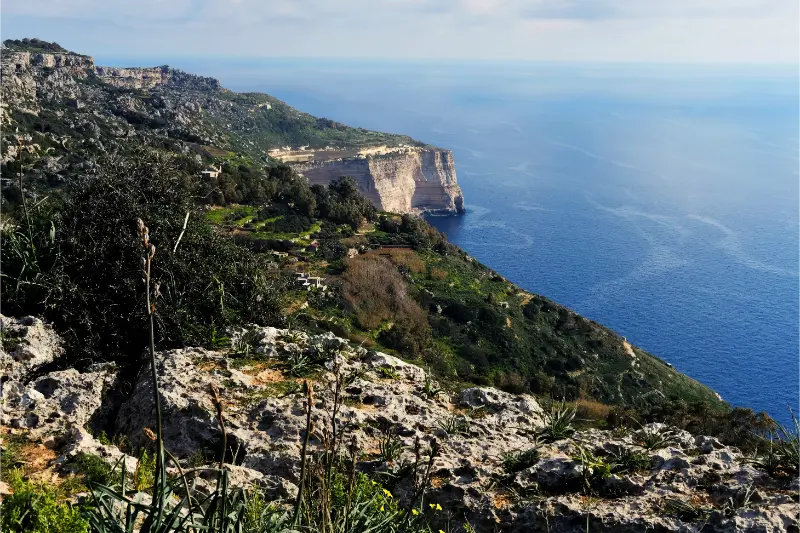
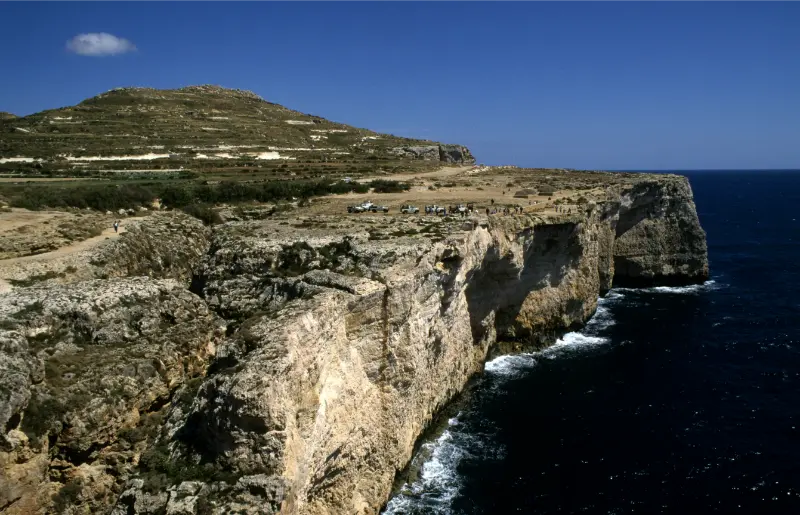
Dingli Cliffs are often sold as a single “viewpoint”, but the experience is better understood as a stretch of high western coastline where roads, walking paths, fields and sea views meet. There is no entrance gate and no one mandatory photo spot. The reward comes from choosing the right weather, walking a little and giving the landscape enough time to feel different from Malta’s towns and beaches.
The cliffs are particularly popular near sunset, but that is also when transport and safety planning matter most. A beautiful orange sky is not worth walking beside an unlit road after dark without a plan for getting back.
Where are Dingli Cliffs?
Dingli lies on Malta’s western side, southwest of Mdina and Rabat. The village sits inland from the cliff edge, while the coastal road and viewpoints spread over a wider area. This means “take the bus to Dingli” is not the entire transport plan: you still need to understand where you want to walk.
The area works naturally with Mdina and Rabat on the same day because they are geographically close, but combining them requires restraint. A full Mdina/Rabat sightseeing programme plus a long cliff walk can become tiring, especially in summer.
What makes the cliffs worth visiting
The appeal is scale. After the dense streets of Valletta or the enclosed walls of Mdina, Dingli opens into sea, sky and exposed limestone. Offshore, the small uninhabited islet of Filfla can be visible in clear conditions. Agricultural land and chapels add context to the coastline.
This is not a beach stop and there is no expectation that you descend to the water. The experience is primarily scenic: walking, photography, sunset and a sense of Malta’s exposed western edge.
Best time of day
Late afternoon is the classic choice because the cliffs face west and the light softens. In summer, it also avoids the harshest heat. Morning is better for walkers who want cooler temperatures and quieter roads.
Sunset itself creates a practical problem: public transport becomes less frequent later and paths become dark quickly. If you are not driving, check your return before committing to the final minutes of sunset.
Best season for walking
Autumn, winter and spring are usually more comfortable for longer walks because the landscape is greener and temperatures lower. Winter can be windy and weather changes quickly. Summer provides long evenings but very little shade.
Avoid exposed walks during extreme heat, strong wind or thunderstorms. The cliffs amplify weather: a breeze in town can become powerful on the edge.
Walking around Dingli Cliffs
VisitMalta includes the Dingli, Fawwara, Wied iż-Żurrieq Walk among its official walking routes. You do not need to complete a long route to enjoy the area; even a shorter out-and-back walk gives you multiple perspectives.
Use a proper map or GPX route if you leave the obvious roadside sections. Field tracks can look interchangeable, and private agricultural land should be respected. Do not climb walls or cut across cultivated plots for a photograph.
Safety at the cliff edge
The cliffs are a natural landscape, not a fenced urban viewpoint. Stay well back from edges, especially in wind, and never trust a crumbly-looking limestone lip because other people are standing on it. Children need close supervision.
Photography creates extra risk when people walk backwards, focus on a phone screen or step onto exposed rocks for a cleaner composition. Stop moving before framing the shot. Drones are subject to aviation and site rules; do not assume open countryside means unrestricted flying.
Getting to Dingli Cliffs by bus
Public buses serve Dingli village and surrounding areas, but route numbers and timetables can change. Use Malta Public Transport’s current journey planner or Tallinja app on the day rather than relying on a blog screenshot from years ago.
Allow time to walk from the bus stop to your chosen cliff section. After sunset, be particularly conservative about connections. Our Malta Bus Guide explains fares and planning.
Driving and parking
A rental car gives flexibility for sunset and allows you to combine the cliffs with Mdina, Rabat, Blue Grotto or the prehistoric temples. The roads near the cliffs can be narrow and exposed, and roadside parking must never block traffic, field access or private entrances.
Do not stop in a live lane simply because a viewpoint appears. Continue to a safe place and walk back. Read our parking guide and car-rental guide if you are driving.
Dingli Cliffs and sunset photography
Arrive at least forty-five minutes before sunset. The best images often happen before the sun reaches the horizon, when warm side light reveals the texture of the cliffs and fields. After the sun drops, the sky can remain colourful while the foreground darkens rapidly.
A phone or camera with a wider lens works well for landscape context. Rather than photographing only the sun, include a road, chapel, field wall or human figure to show scale.
What to bring
- Closed or secure walking shoes rather than loose beach sandals.
- Water, especially from late spring to early autumn.
- Sun protection and a hat.
- A light layer outside summer because wind can make the coast feel cooler.
- A charged phone with offline map access.
- A small light if you intentionally plan to walk after sunset.
Combine Dingli Cliffs with Mdina and Rabat
This is the most natural cultural combination. Spend the morning in Mdina and Rabat, eat lunch there, rest during the strongest heat, then continue to Dingli in late afternoon. The contrast between fortified stone streets and open coastline makes the day feel varied.
Do not add another major beach or Valletta to the same plan unless you have private transport and intentionally want a fast day. Malta looks small on a map, but parking and transfers consume time.
Combine Dingli with Ħaġar Qim, Mnajdra or Blue Grotto
With a car or organised tour, the cliffs can fit into a southern/western Malta route with the prehistoric temples and Blue Grotto. This creates a landscape-and-history day rather than bouncing between unrelated attractions.
Check attraction closing times first. Natural viewpoints are flexible; ticketed heritage sites are not. Visit the timed site first and use Dingli as the flexible late-day finish.
Food and facilities
Dingli village has cafés and local services, but the exposed cliff sections should not be approached as a serviced attraction. Carry water and use toilets before a longer walk. Do not leave rubbish at roadside viewpoints.
If dinner matters, consider returning to Rabat, Mdina or your accommodation base rather than searching for a specific cliffside restaurant at the last minute.
Frequently asked questions
Is Dingli Cliffs free?
Yes, the landscape and public viewpoints do not require an admission ticket. Guided walks or tours are separate commercial services.
Can you swim at Dingli Cliffs?
Dingli Cliffs are visited for views and walking, not as an easy swimming beach. Choose a designated, accessible swimming spot elsewhere.
Is Dingli Cliffs worth visiting without a car?
Yes, but public-transport visitors should plan the exact stop, walking distance and return time, especially around sunset.
A note on wind, vertigo and choosing the right viewpoint
Not every traveller enjoys exposed cliff edges. If you have vertigo, you can still experience Dingli from roadside viewpoints and broad sections set back from the edge. There is no prize for approaching the drop. The landscape is large enough to appreciate from a safe distance.
Wind is another reason to remain conservative. Gusts can affect balance, hats, phones and lightweight tripods. If conditions feel uncomfortable, return to the village or switch the day to Mdina and Rabat. The cliffs will not be improved by forcing the visit in bad weather.
How to combine Dingli Cliffs with nearby places
Dingli works best as part of a western-Malta day rather than an isolated cross-island journey. Mdina and Rabat are the obvious cultural partners because they are relatively close and provide museums, cafés and shade before or after an exposed coastal walk. Another option is to connect Dingli with the Blue Grotto and Ħaġar Qim/Mnajdra area if you have a car, creating a route focused on cliffs, archaeology and open landscapes.
Do not overload the combination. Dingli is most enjoyable when you have time to stop at a viewpoint, walk a short section and respond to the weather. Trying to add Mdina, temples, Blue Grotto, Marsaxlokk and a sunset in one day turns western Malta into a driving exercise. Choose two major anchors plus one flexible stop.
Photography and sunset planning without taking risks
The cliffs are dramatic because the landscape is broad, not because you need to stand on an edge. Use foreground walls, fields, chapel silhouettes and the horizon to build photographs from safe positions. A phone or normal zoom lens can compress the coastline without requiring you to step onto unstable ground. Avoid walking backwards while framing a shot, especially in fading light.
For sunset, arrive before golden hour so you can choose a safe location in daylight. Bring a small light for the return to your car or bus stop and check the final public-transport connection in advance. Clouds can make the evening more interesting, but strong wind, rain or poor visibility are reasons to leave rather than wait for a photograph. A good sunset plan always includes a safe exit.