

Malta can be an affordable Mediterranean trip if you control accommodation and transport instead of trying to save a few cents on every coffee. The islands offer free historic streets, public viewpoints, swimming spots, coastal walks and inexpensive local snacks, but summer hotel prices and repeated taxis can quickly destroy a budget.
This guide focuses on value rather than deprivation. The aim is to spend less on things that do not improve the trip and keep money for one or two experiences that genuinely matter—perhaps the Hypogeum, a boat day, a memorable dinner or an overnight stay on Gozo.
Keep your Malta trip affordable
Compare current options before you book. Availability and prices can change by date.
Affiliate links: My Malta Trip may earn a commission at no extra cost to you.
At a glance
| Expense | Budget approach |
| Accommodation | Travel shoulder season / stay outside nightlife hotspots |
| Transport | Bus + ferries + selective taxis |
| Breakfast/lunch | Bakery, pastizzi, supermarket picnic |
| Sightseeing | Mix free cities with 1 paid attraction/day |
| Beaches | Public swimming spots |
When Malta is cheapest
Accommodation is the largest variable. July and August are the hardest months for a low-budget trip because beach demand, festivals and school holidays push prices upward. Late autumn, winter outside holiday periods and parts of spring are usually easier. The trade-off is less reliable swimming weather, but sightseeing in Valletta and Mdina can actually be more comfortable.
If you want warm sea and lower prices, look at late September into October rather than automatically choosing August. Our best time to visit Malta guide explains the seasonal trade-offs in more detail.
Choose accommodation for total cost, not room rate
A hotel that saves €15 per night can be a false bargain if you need two taxis every day. Look for accommodation within walking distance of a useful bus corridor, ferry or the places you want to use in the evening. Sliema, Gżira and parts of St Paul’s Bay can provide good value depending on dates, while Valletta and central St Julian’s may cost more at popular times.
Hostels suit solo travellers, apartments can work for families who will genuinely cook, and simple guesthouses are often better value than resorts when you plan to sightsee all day. Compare the full stay on Booking.com, then check cancellation terms and the map before deciding.
Use buses strategically
In September 2026 Malta Public Transport lists the summer day-route fare at €2.50 for on-board cash/contactless payment, with two-hour ticket validity, while 4-day and 7-day visitor bundles are also available. Check current fares because seasonal prices and products can change.
For a traveller taking only two rides in a day, paying as you go may be cheaper than an unlimited pass. For someone crossing the island repeatedly, a multi-day product can be easier. Run the numbers based on your itinerary rather than buying a card simply because it is marketed to tourists.
Harbour ferries are also excellent value because they combine transport with sightseeing. Walking plus ferry is often more enjoyable than paying for a taxi around Grand Harbour.
Eat well without expensive restaurants three times a day
Malta is unusually friendly to a mixed food budget. Pastizzi make a cheap snack or light breakfast; bakeries sell filled bread, pies and savoury items; supermarkets make picnics easy. Save the restaurant budget for dinner rather than eating a full sit-down meal at every opportunity.
Try local dishes when they add something to the trip. Our Maltese food guide explains pastizzi, ftira, rabbit, fish and other staples. A lunch of ftira or bakery food followed by one good seafood dinner in Marsaxlokk can be more memorable than three mediocre tourist-menu meals.
Drink tap water only if current local guidance and your accommodation advise it is suitable for you; many visitors prefer bottled or filtered water because of taste. Buying larger bottles at supermarkets is cheaper than repeatedly buying small bottles in tourist areas.
Free things to do in Malta
Many of Malta’s strongest experiences do not require admission. Walk Valletta’s streets and gardens, explore Mdina’s lanes, cross the Three Cities on foot, watch the boats in Marsaxlokk, swim from public beaches and rocky lidos, and enjoy sunset viewpoints. Churches may be free or request donations, while some major attractions charge entry.
Build each day around one paid highlight and several free experiences. In Valletta, for example, you might pay for St John’s Co-Cathedral or Fort St Elmo but spend the rest of the day walking streets, gardens and harbour viewpoints. In Mdina and Rabat, the city itself is the main attraction even if you skip museums.
Beaches are a budget traveller’s advantage
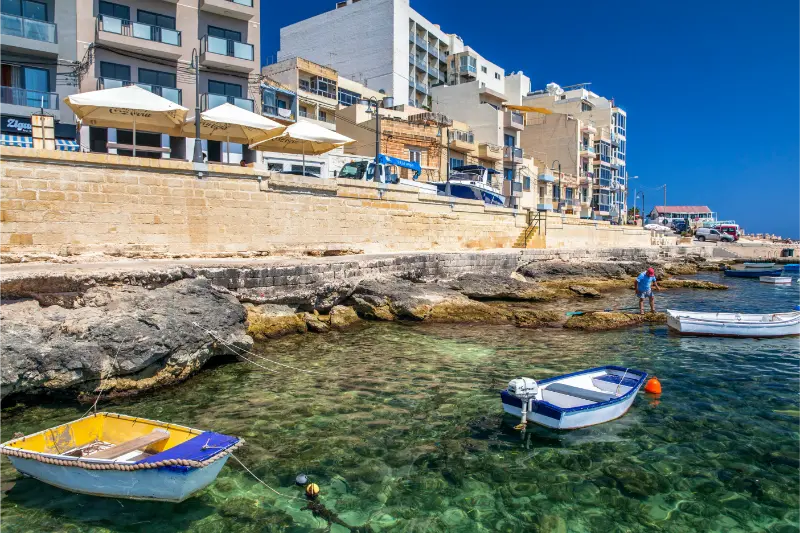
Public access to beaches and swimming areas means a sea day can be inexpensive. Mellieħa Bay, Golden Bay and Għajn Tuffieħa are obvious sandy options, while Sliema has rocky swimming close to accommodation and food shops. Bring a reusable bottle, sun protection and a simple picnic.

Avoid turning a “free beach day” into an expensive one through unplanned sunbed rentals, beach-club entry, cocktails and taxis. None of those are inherently bad purchases; decide which ones matter before you arrive.
Where it is worth spending more
Budget travel improves when you identify the exceptions. The Ħal Saflieni Hypogeum is expensive compared with ordinary museums, but it is a unique UNESCO-listed underground complex with limited visitor capacity. If archaeology matters to you, booking it can be a better use of money than several minor attractions.
A well-chosen boat trip can also justify its cost if it gives you access to Comino, caves or swimming places that are awkward independently. Likewise, one night on Gozo may reveal more of the island than an exhausting day trip, even if the hotel adds expense.
A sample low-cost day in Valletta
- Walk into Valletta and explore Republic Street and side lanes.
- Visit Upper Barrakka Gardens and harbour viewpoints.
- Buy a bakery lunch or ftira instead of a long sit-down meal.
- Choose one paid attraction only.
- Take the ferry to the Three Cities or Sliema for the view.
- Return for a simple dinner away from the most obvious tourist frontages.
The point is not the exact euro amount; it is that the day remains full even though only one major attraction is paid.
Common budget mistakes
- Travelling in peak August solely because flights looked cheap.
- Choosing remote accommodation without calculating transport.
- Using taxis for journeys that ferries or buses handle well.
- Eating every meal on the most scenic waterfront table.
- Buying multiple attractions you do not have time to enjoy.
- Visiting Comino without checking the current Blue Lagoon access system and then paying for an improvised alternative.
How much should you budget per day?
There is no honest universal figure because accommodation dominates the calculation and varies enormously by season. A traveller in a hostel using buses and bakeries can spend very differently from a couple in a boutique Valletta hotel. Separate your budget into accommodation, local transport, food and paid experiences, then price those categories with your actual dates.
For planning, decide on a maximum daily “experience budget” after flights and accommodation. That makes it easier to choose between a €35 Hypogeum ticket, a boat trip or several smaller museums without losing track of the total.
How to keep attraction costs under control
Malta rewards travellers who decide in advance which paid sights genuinely matter. Before the trip, write down the three experiences you would regret missing and price those first. Everything else can compete for the remaining budget. This prevents the common pattern of buying several small admissions simply because you are already standing at the ticket desk, then discovering that the one exceptional site you wanted has sold out or no longer fits the budget.
Also look at combination tickets only when the included sites match your itinerary. A pass is not a saving if it changes your route or encourages you to enter attractions you would otherwise skip. In a compact destination, walking historic streets, taking a harbour ferry and spending time at a public beach can create a full day between paid visits.
Frequently asked questions
Is Malta expensive for tourists?
Malta can be mid-range rather than ultra-cheap, especially for accommodation in summer. However, buses are affordable, many historic areas are free to explore, public beaches cost nothing and local bakery food can be inexpensive. The trip becomes expensive mainly through peak-season hotels, frequent taxis, beach clubs and eating every meal in high-traffic tourist locations.
What is the cheapest way to get around Malta?
For most visitors, buses are the cheapest comprehensive transport option. Walking and harbour ferries can reduce costs further in Valletta, Sliema and the Three Cities. If several people are travelling together, an occasional taxi may still make financial sense when it replaces a long, inconvenient sequence of connections.
Can you visit Malta’s beaches for free?
Yes. Malta has many public beaches and rocky swimming areas. You may pay for optional sunbeds, umbrellas, water sports or beach clubs, but access to standard public beach areas is generally not based on buying a resort day pass. Bring your own towel, water and shade solution if you want to keep costs low.
What is the best budget-friendly food in Malta?
Pastizzi are the classic inexpensive snack, while bakeries and ftira-style sandwiches can make good low-cost lunches. Supermarkets are useful for fruit, drinks and picnic supplies. Save restaurant spending for dishes or locations that genuinely add value, such as a seafood lunch in Marsaxlokk or a traditional Maltese dinner.
Final thoughts
A good Malta budget is not about saying no to everything. It is about paying for the parts of the islands you could not reproduce elsewhere and saving on routine costs. Walk more, use public transport intelligently, eat simple local food during the day and choose a small number of paid experiences you will actually remember.