

Blue Grotto is one of Malta’s most recognisable coastal sights, but the experience has two different parts: the clifftop viewpoint and the small-boat trips from Wied iż-Żurrieq below. Many visitors see one and assume they have seen the other. If conditions cooperate, combining both gives a much better sense of the cliffs, arches and colour of the water.
This guide explains how to plan the visit without relying on fixed boat promises. The southern coast is exposed, and small boat operations depend on sea conditions. A sunny day does not guarantee that boats will run.
Plan a Blue Grotto visit
Compare current options before you book. Availability and prices can change by date.
Affiliate links: My Malta Trip may earn a commission at no extra cost to you.
At a glance
| Experience | Allow |
| Roadside/clifftop viewpoint | 20–40 minutes |
| Boat trip + harbour | 60–90 minutes |
| With Ħaġar Qim/Mnajdra | Half day |
| With Marsaxlokk | Full day if transport is planned |
What exactly is the Blue Grotto?
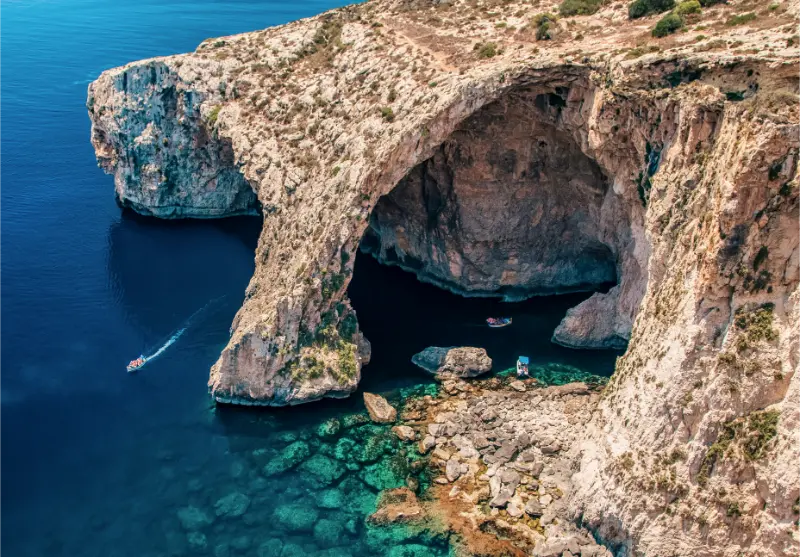
Blue Grotto is the name used for a series of sea caves and arches on Malta’s south coast near Wied iż-Żurrieq. The scenery is formed from pale limestone meeting deep Mediterranean water, with changing light creating intense blue tones in suitable conditions. The name is used both for the wider cave area and for the best-known arch view.
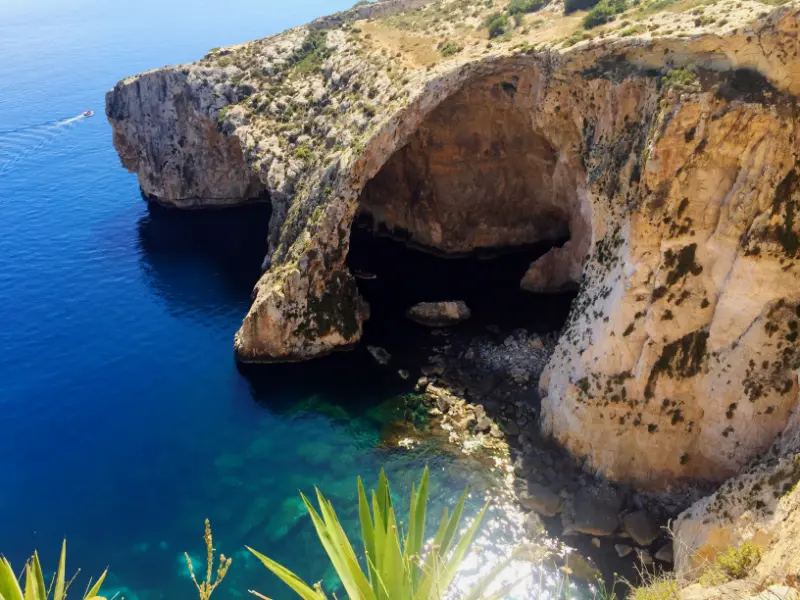
The clifftop viewpoint shows the large natural arch from above. Boat trips leave from the small harbour at Wied iż-Żurrieq and approach caves from sea level. Neither replaces the other: the viewpoint gives scale, while the boat reveals the rock and reflected light up close.
When to visit for the best light
Morning is often recommended because sunlight can produce brighter reflections in the caves, but the exact effect depends on season, sun angle and sea state. If photography is your priority, earlier light also reduces harsh midday contrast on the pale rock.
That said, choose calm conditions over theoretical perfect light. A late-morning visit on a safe, clear day is more useful than arriving at 8am after strong wind and discovering that boats are not operating.
The viewpoint
The main roadside viewpoint is the easiest part of the visit and requires no boat. It looks across the large arch and open sea. Stop safely, use designated pedestrian areas and do not climb beyond barriers for a slightly different photograph.
The viewpoint can be windy even when inland Malta feels calm. Hats and loose items disappear quickly near exposed cliffs. Families should keep children close and treat the barrier as a real safety boundary, not a photography suggestion.
Boat trips from Wied iż-Żurrieq
Small boats operate from the harbour below when sea conditions permit. The route normally focuses on the caves and arches along the coast, but exact access changes with swell. Current prices, operating times and route details should be checked locally or with the operator because they can change seasonally.
Do not be disappointed if boats are cancelled. The coast is exposed and the craft are small; cancellation can be the correct safety decision even under blue skies. Keep the prehistoric temples or Marsaxlokk as a land-based alternative for the same day.
How to get there without a car
Public buses serve the Żurrieq/Blue Grotto area, but route numbers and frequencies should be checked with Malta Public Transport shortly before travel. Use the official journey planner rather than an old screenshot from a travel blog.
If you are combining Blue Grotto with Ħaġar Qim and Mnajdra, the bus may be practical but require patience. A taxi for one leg can save meaningful time. From Valletta, the south is close on the map but traffic and connections mean you should still allow a generous half day.
Driving and parking
A car makes it easier to combine the viewpoint, harbour and archaeological park. Roads in the area can be narrow and busy during popular hours, so do not stop in unsafe places simply because other cars have done so. Use marked or clearly legal parking and expect more competition on summer weekends.
If you rented a car only for western and southern Malta, Blue Grotto pairs naturally with the temples and possibly Dingli later in the day. It does not pair naturally with an early-morning Gozo excursion.
Combine Blue Grotto with Ħaġar Qim and Mnajdra
This is the strongest cultural combination. Ħaġar Qim and Mnajdra are more than 5,000 years old and form part of Malta’s UNESCO-listed megalithic temples. The two temple groups are about 500 metres apart, linked by a path within the archaeological park.
Heritage Malta currently advises that the visitor centre and Ħaġar Qim are accessible while Mnajdra itself is not fully accessible for visitors with mobility impairment. Allow roughly 90 minutes to three hours depending on how deeply you engage with the visitor centre and temples.
Visit the temples first if archaeology matters most, then use Blue Grotto as the scenic half of the outing. In summer, an early temple visit also avoids walking between exposed sites in the strongest midday heat.
Combine Blue Grotto with Marsaxlokk
Marsaxlokk is another reasonable southern-Malta pairing, particularly by car. Have a harbour lunch and then head toward Blue Grotto, or reverse the order if you want the earlier cave light.
Without a car, check transfers before committing. The two places are both “south” but are not adjacent in the way visitors sometimes assume. A taxi between them can make the combination much more practical.
Swimming near Blue Grotto
Wied iż-Żurrieq is a working boat area rather than a broad sandy beach. Swimming possibilities depend on local access and sea conditions, but this should not be your primary beach day. For dedicated swimming, Malta has easier sandy and rocky locations described in our best beaches guide.
Never jump from cliffs or enter rough water because you saw someone do it online. The southern coast has deep water, boat movement and exposed rock.
A practical half-day plan
- Start at Ħaġar Qim/Mnajdra early if you want the full archaeological visit.
- Drive or transfer to the Blue Grotto viewpoint.
- Continue to Wied iż-Żurrieq.
- Take a boat trip only if conditions are suitable.
- Have lunch nearby or continue toward Marsaxlokk.
This order also protects the day: if boats are cancelled, the temples and viewpoint still make the trip worthwhile.
Where to eat and how to avoid turning the visit into a rushed stop
Wied iż-Żurrieq has restaurants and casual places around the harbour area, which makes lunch convenient after a boat trip. You do not need to choose the first terrace you see. Check the menu, ask about fresh fish prices when sold by weight and decide whether you are paying for a sea view or for the food itself. If your next stop is Marsaxlokk, you may prefer to save the main seafood meal for there.
The Blue Grotto area is more enjoyable when you allow a little time to watch the boats and coastline rather than arriving, taking one photograph and leaving. A half-day itinerary creates room for the viewpoint, a possible boat ride and lunch without clock-watching. This also protects you from small delays in public transport or from waiting for the next boat departure.
If you are travelling with children, the harbour can be more interesting than the viewpoint alone because there is movement and a clear activity to anticipate. Keep young children away from unprotected edges and do not promise the boat ride until you know operations are running. A cancelled boat is much easier to handle when the day also includes the temples or another planned stop.
Photographers should carry a polarising filter only if they already know how to use it; it can deepen water colour but may also reduce reflections that make the caves interesting. A phone or normal lens is enough for most visitors. The strongest composition is often the relationship between limestone and sea rather than a tightly zoomed cave opening.
Frequently asked questions
Is Blue Grotto Malta worth visiting?
Yes, especially when combined with Ħaġar Qim and Mnajdra. The viewpoint alone is a short stop, but the coastal arch, harbour and possible boat trip create a more complete experience. Travellers with only two days in Malta may prioritize Valletta and Mdina first; with four days or more, Blue Grotto fits well.
Do Blue Grotto boats run every day?
Not necessarily. Operations depend on sea and weather conditions and can be suspended even when the sky looks sunny. Check locally on the day and keep a nearby land-based attraction as backup.
How long do you need at Blue Grotto?
Allow around 20–40 minutes for the clifftop viewpoint alone and roughly 60–90 minutes for the harbour plus a boat trip, excluding transport. Combine it with the prehistoric temples for a rewarding half day.
Can you visit Blue Grotto without a car?
Yes. Public transport reaches the area, though connections are slower than driving. Check current Malta Public Transport routes and consider a taxi for one leg if you are combining several southern sights.
Final thoughts
Blue Grotto is best treated as a coastal experience, not a single photo stop. See the arch from above, descend to Wied iż-Żurrieq and take the boat only when the sea allows. Pair it with Malta’s prehistoric temples and the day combines two of the island’s strongest themes: dramatic geology and extraordinary human history.